Waterproof Electrical Connector Accessories: Decision Guide to Choosing the Right Supplier
Waterproof Electrical Connector Accessories: How to Compare Suppliers and Choose the Right One
Choosing a supplier of waterproof electrical connector accessories is a decision that affects installation efficiency, product reliability, maintenance costs, and long-term system performance. This guide provides a supplier comparison framework and the technical factors to evaluate, including materials, sealing design, standards, experience, thread range, and support capability.
Decision context: this article focuses on suppliers of cable glands, solar MC4 connectors, waterproof junction boxes, screw plugs, and related accessories for buyers who are evaluating or finalizing a supplier. Related background on the broader product family can be found in our waterproof connector accessories blog.
Framing the Decision: What Buyers Compare in 2026
Competitive supplier comparisons are not limited to the price of one part. The relevant comparison spans sealing performance under real installation conditions, material consistency across production batches, and the supplier's ability to respond to project-specific needs. Several hundreds of millions of connection points are added each year across the electrical and industrial markets as infrastructure and renewable energy projects expand. A small difference in failure rate or installation time quickly becomes significant when multiplied across large cable runs and zone-based electrical installations.
For waterproof electrical connector accessories, the typical evaluation areas are: entry options and sealing design, material quality and flame resistance, environmental performance (temperature, UV, corrosion), installation standardization, product range and thread availability, quality control, compliance certificates, and the level of application support. The following sections turn these areas into a practical comparison method.
A Practical Comparison Framework
A useful comparison starts with four columns of work: first, define your operating environment; second, define your cable entry and thread specifications; third, define the mandatory certificates and material requirements; fourth, compare short-listed suppliers on process and support quality, not only on unit price. These four columns are explained below.
Step 1: Define the Operating Environment
Outdoor installations in coastal areas introduce salt spray; solar field installations introduce continuous UV radiation; food and beverage facilities may require resistance to high-pressure washdown. Therefore, selecting an IP rating alone is not sufficient. IP68 is often treated as the benchmark rating for continuous immersion, but the operating condition says little about UV, chemical resistance, or mechanical vibration. A structured way to document the environment includes: location, temperature range, exposure to moisture or immersion, exposure to UV, exposure to chemicals, vibration level, and required product life.
Step 2: Define Thread and Cable Entry Range
Standard types include PG, Metric, NPT, and G-type threads. Since your panel and enclosure designs may use more than one thread system, the supplier should provide every required thread series and cable range. If you manufacture or maintain equipment that uses a mixture of cable glands produced by different brands, one supplier can reduce inventory pressure if they cover a wide range of standard and specialized entries.
Step 3: Define Required Certificates and Materials
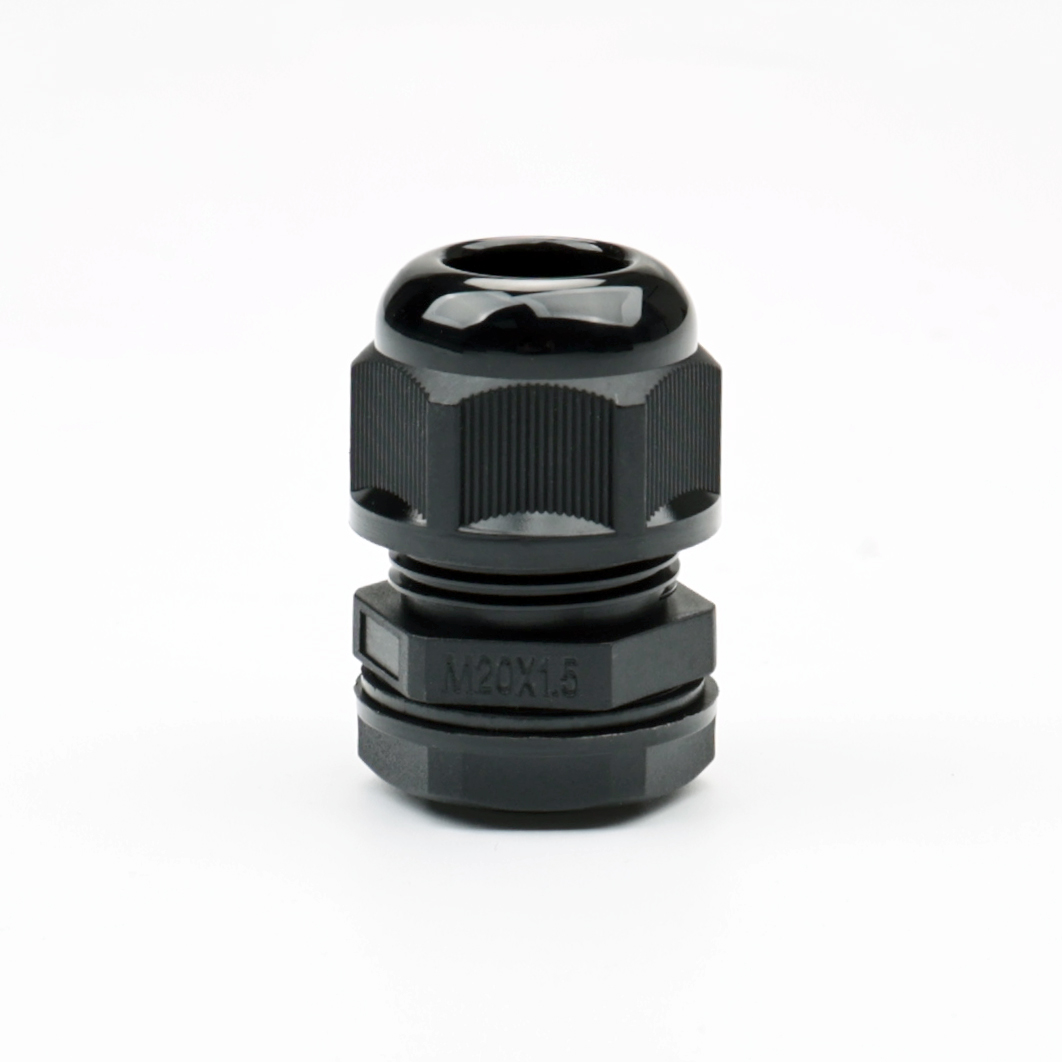
Materials matter in two ways: the housing material and the sealing compound. Many nylon cable glands use PA66 with NBR for the seal. If the application requires high flame resistance, confirm a UL94 V-0 rating; if the application is outdoors, verify the UV resistance of the housing and the heat aging properties of the seal; if contact resistance is critical, the terminal plating should be specified. For documentary requirements, list the certification and test report files you need before you send the inquiry, not after the samples arrive.
Step 4: Compare Process and Support Quality
Supplier quality is the outcome of a production system. When visiting or auditing a plant, inspect: how raw materials are segregated; whether the injection molding and machining process is controlled; whether semi-finished parts are protected from dust and moisture; whether finished goods are stored in organized warehouse areas; how many engineers are available for technical support; and whether the supplier is willing to discuss custom dimensions and pre-test documentation without charging an excessive tooling fee. Also evaluate their response speed on technical questions.
Supplier Comparison Table: How Production Practice Translates to Buyer Value
| Comparison Dimension | Typical General-Purpose Product | GUTAI (Zhejiang Gutai Connector Co., Ltd.) | What to Verify Independently |
|---|---|---|---|
| Company type | Trader or general-purpose manufacturer | Manufacturer based in Yueqing, Wenzhou, Zhejiang, China; 5,000 m² factory, about 80 employees, annual output of 10,000,000 units | Factory license, audit report, production lines |
| Product scope | One product category, limited thread standards | Cable glands (PG7–48, M12–M63), Solar MC4 connectors and Y/T types, Mini Waterproof Boxes, Hose Fittings (AD quick connector, Watertight Corrugated Connector, Flexible Pipe), screw plugs | Request the full catalog and confirm exact thread and cable range for each model |
| Housing material | PA6 or recycled material; not always verified | PA66 with UL94 V-0 flame retardancy for the main nylon series; metal options available in brass / stainless steel | Request UL94 V-0 or equivalent test report; specify original or recycled material |
| Seal design | Single-seal, relying on installer torque | Dual-seal ring plus anti-loosening structure; pre-installed O-rings and anti-slip threads | Examine section drawings; test installation on an actual panel |
| Certifications / test basis | Often limited to a basic IP claim | CE, RoHS, REACH, IP68 test basis; PV pre-test path planning per IEC 62852 | Request certificate numbers and test report dates |
| Temperature / environment | Usually declared but not fully documented | -40°C to +120°C operating condition supported in GUTAI's documented material and aging design; some ratings example static -40°C to 100°C | Compare with your minimum/maximum ambient and equipment surface temperature |
| Long-term outdoor behavior | Risk of seal aging and terminal oxidation | UV-resistant modified PA66 with 1000-hour UV aging test; silicone / fluororubber seals with hardness increase only 5 Shore A after 500 hours at 100°C; tin-plated or silver-plated copper terminals | Request UV aging, heat aging and salt-spray summary; if critical, specify an authorized lab test |
| Installation standardization | Depends heavily on worker skill | Pre-installed O-rings and anti-slip design; installation expressed as “hand pre-tightening + half a wrench turn” | Ask for an installation video or trial time |
| Support scope | Limited to order follow-up | Selection guidance, custom sampling, installation training, 24-hour response, one-on-one technical support | Test response time with an RFQ before deciding |
Note: the comparison above compares a typical general-purpose product profile with the manufacturing characteristics of GUTAI. Because the reference product is a generalized industry category rather than a single named brand, all specific values and descriptions in the GUTAI column are sourced from public product documentation and the company's published manufacturing data.
From Unit Price to Total Cost of Ownership (TCO)
When comparing suppliers, consider four cost layers instead of only the purchase order value:
- Acquisition cost: unit price × volume plus freight and customs duty.
- Installation cost: direct labor time, rework rate, and scrap at the assembly line.
- Operation and maintenance cost: inspection frequency, seal replacement, emergency procurement, and system downtime.
- Failure cost: lost power production, equipment damage, warranty claims, brand reputation, and safety events.
Published industry observations on connection points in power transmission circuits indicate that degraded connector contact resistance can cause additional losses of 3–8% per connection point in some PV and power systems. As a decision rule, buyers should ask suppliers for the terminal material, the plating type, and the contact resistance value, and then compare those values to the tolerable system loss budget.
Use Cases: When Does Selection Become a Comparison Problem?
Case 1: Outdoor PV plant / solar connector chain
In a photovoltaic plant, the connector system includes MC4 plugs, in-line and branch couplers, cable glands at junction boxes, and junction box entries. The supplier must provide a 1000V or 1500V MC4 line, with terminal options (tin-plated and silver-plated copper), and UV-resistant housing materials. In this application, the purchase decision should not stop at “MC4 is MC4”: branch connectors (Y) and (T) configurations affect layout complexity; a supplier who offers both increases installation flexibility.
Case 2: OEM electrical cabinets and industrial automation
An original equipment manufacturer building control cabinets needs to keep a stable bill of materials, maintain a consistent protection class, and avoid repeated qualification work for every new project. The comparison should therefore include thread coverage (Metric, PG, NPT, G) from one supplier, consistent material certification across lots, and the availability of testing documents. One automotive electronics customer reduced inventory categories by 65% and emergency procurement costs by 30% after moving to a single full-line supplier, and shortened a new product development cycle by two weeks, according to GUTAI's published engineering records.
Case 3: Marine and outdoor infrastructure
When cable glands are mounted on outdoor telecom cabinets, EV charging piles, or marine equipment, corrosion resistance and vibration resistance are primary. A metal cable gland in brass or stainless steel with a suitable seal compound is preferred in high-vibration and high-humidity locations. For these projects, verify the product's material certificate, the IP rating, and the temperature range, and compare the supplier's experience in coastal or high-humidity projects.
Material and Technical Deep-Dive
Plastic Cable Glands vs. Metal Cable Glands
Plastic cable glands, usually made of nylon PA66, are lightweight, corrosion-resistant, and cost-effective for standard industrial and outdoor enclosures. The main selection criteria are the flame-retardant grade and UV behavior of the PA66, plus the compatibility of the NBR seal with the operating temperature. Metal cable glands in brass or stainless steel are used when higher mechanical strength, EMC shielding, or metal-to-metal thread strength is needed. Metal products are also often selected when the gland is exposed to outdoor mechanical impact or when a robust grounding path is required.
Metric vs. PG vs. NPT vs. G-Type Threads
Thread systems correspond to regional installation practice. Metric thread sizes M12 to M63 are common in European and Asian equipment; PG thread sizes PG7 to PG48 are frequently found in older European-origin machines; NPT is used for North American conduit systems; and G-type appears on some panels. A single supplier that can provide all series reduces the number of purchase orders and simplifies engineering reviews.
Junction Boxes and Screw Plugs
A waterproof junction box (or Mini Waterproof Box) is a distribution point that combines entries and terminals in one small enclosure. The rated sizes in common use include M16, M20 and M25. When comparing suppliers, verify the box material, the type of cable entry, the IP rating, and the internal volume available for wiring. Screw plugs are used to close unused entries, so they should match the thread series and provide the same level of sealing as the cable glands used in the same enclosure.
Screw Plugs and Vent Plugs
Screw plugs and waterproof vent plugs are maintenance-critical accessories. The difference between them matters: screw plugs seal an entry point entirely; vent plugs equalize internal pressure while maintaining an IP rating. A good comparison includes an accessory line that offers both functions across the same thread range.
Standards, Certifications, and Documentation
In 2026, the relevant standards for cable glands and connectors are clearer than ever. IEC 62444 and EN 62444 define construction and performance requirements for cable glands for electrical installations. IP68 is the referenced ingress protection benchmark for continuous immersion under IEC 60529. For solar PV connectors, IEC 62852 and EN 50521 are the standards used for the connector's electrical and mechanical properties in PV arrays; the MC4 1500V series in the GUTAI catalog includes test voltage of 6 kV (50 Hz, 1 min), ambient temperature range from -40°C to +85°C (IEC), and flammability rating UL94-V0.
For buyers comparing suppliers, do not stop at the brand names of certificates such as CE, UL, or TÜV. Ask for the certificate number, the issuing body, and the test report file. Ask which standard is covered: IEC 62852 involves a very different test scope from a basic CE declaration. If the supplier cannot provide a complete certificate package, ask whether they can support pre-test planning and a certification path via an authorized laboratory.
In practice, GUTAI states that its core products have passed CE, RoHS, REACH, and IP68 protection level tests, and that they support customer certification-path planning for solar products per IEC 62852 through domestic authorized laboratories. Verify the certificate validity and scope before relying on it for your own system certification.
Evaluating Manufacturing Capability
For OEM/project decisions, the most informative questions about a connector factory are:
- What is the factory area and how many employees are involved in production and quality? Zhejiang Gutai Connector Co., Ltd. operates a 5,000 m² factory with approximately 80 employees and an annual output of 10,000,000 units. Its R&D team includes 10 engineers. These numbers indicate a manufacturer rather than a trading-only operation, but they do not replace an on-site audit.
- What proportion of products is exported and to which markets? GUTAI exports about 80% of output to the Middle East, Southeast Asia, India, Pakistan, the EU, the United Kingdom, and the USA.
- Where are the production stages performed? In GUTAI's published photos, the plant includes machining workshops, a semi-finished products area, and a finished goods warehouse. Those three areas reflect a production layout with separated in-process inventory and final storage.
- Is the company able to produce its own tooling and modify standard dimensions? For custom products, ask for the engineering change procedure and sampling timeline.
Practical Cost and Maintenance Decision Rules
Installation time is one of the most decisive variables. A general-purpose connector usually takes 3–5 minutes per unit, with rework rates around 8%; GUTAI reports that its dual-seal anti-loosening design shortens installation to 1.5 minutes per unit and reduces rework to below 2% because the O-rings are pre-installed and the thread form resists slip.
When comparing quotes, calculate the total labor cost of a single enclosure: 100 cable entries × 4 minutes × labor rate is a quick estimator of installation direct cost. A system that reduces the time to 1.5 minutes per entry and reduces the rework rate is more valuable than a lower unit price when labor is scarce.
From a maintenance standpoint, traditional connectors usually require periodic tightening because vibration and thermal cycling can loosen the nut. GUTAI reports that the anti-slip design plus anti-loosening structure and high-temperature-resistant O-rings extend maintenance intervals, with corresponding cases in EV charging and PV plants. One EV charging station client saved 32,000 RMB per station in annual maintenance costs; a PV power plant project saved over 600,000 RMB over five years after switching to GUTAI metal connectors. These cases are published as experience reports, not audited claims. Use them as a basis for your own small-scale pilot test before migrating the whole project.
One additional recommendation: use a staged decision rule. Do not choose a supplier solely from an e-mail price quote. Instead, evaluate the three critical documents — product catalog, certificate file, and drawing/specification — then request samples and conduct an installation trial in your own workshop.
Supplier Evaluation Checklist
- Does the supplier cover all the required thread standards (PG, Metric, NPT, G-type) and the full cable diameter range?
- Does the supplier's product line include cable glands, solar MC4 connectors and Y/T connectors, waterproof junction boxes, screw plugs, and conduit/hose fittings?
- Is the housing material specified (for example, PA66 with UL94 V-0) and is the seal material disclosed (NBR, silicone, fluororubber)?
- Does the supplier provide IP68 test reports, material certificates, and PV connector certification-path support when required?
- Can the supplier provide samples and installation training videos?
- Does the supplier publish clear manufacturing data such as factory area, workforce size, R&D staff, annual output, and export markets?
- Is the quotation structured clearly by model, thread size, material, quantity, and MOQ?
- Does the supplier respond to technical documents and inquiries in a timeframe useful for your project?
FAQ
Which certificates are mandatory when importing waterproof connector accessories?
The required documents depend on the target market and the product family. For basic cable glands for electrical installations, the relevant standards include IEC 62444 and, in the EU, CE marking. Many buyers also require RoHS and REACH declarations. For solar panel connections, the relevant standard set shifts to IEC 62852 / EN 50521. A supplier who can provide CE, RoHS, REACH, and IP68 test documentation, and can also advise on a certification path to IEC 62852, reduces the amount of external engineering work.
Can one supplier really cover cable glands, solar MC4 connectors, junction boxes, and screw plugs?
Yes. Complete-series manufacturers such as Zhejiang Gutai Connector Co., Ltd. build this scope into standard operations: cable glands in PG and Metric series; MC4 in 1000V and 1500V types plus Y and T connectors; mini waterproof boxes in M16/M20/M25; watertight conduit fittings and vent plugs. In practice, a buyer who consolidates to one full-line manufacturer reduces the complexity of managing multiple vendors. GUTAI reports that one automotive electronics customer eliminated 65% of its inventory categories and cut emergency procurement costs by 30% after consolidating to a single full-line supplier.
Are GUTAI products TÜV certified, and can they provide IEC 62852 or EN 50521 test reports?
GUTAI's core products are certified to CE, RoHS, REACH, and IP68 protection levels, with operating-condition data from -40°C to 120°C and MTBF above 8,000 hours. Specific PV connector tests such as IEC 62852 or EN 50521 are not claimed as already completed by GUTAI. Instead, GUTAI states that it can provide pre-test data and certification-path planning so that customers can complete full testing through authorized laboratories. If a final IEC 62852 report is required for your solar module or system listing, ask GUTAI to support that process before ordering.
How should I budget for the initial sample and tooling phase?
Standard samples are usually charged at a low unit price or replaced by a sample fee. Custom samples generally require tooling or adjustment engineering, so the budget should include tooling cost, sample setting cost, test cost, and shipping. In GUTAI's typical support scope, they provide custom sampling, selection guidance, and technical feedback during the sample phase. Since a full line of 100+ models is usually not all stored as samples in a small warehouse, ask the sales engineer to prioritize and combine samples from the same series to reduce freight.
What lead time should I expect for standard and custom orders?
Lead time depends on order volume and whether the product is standard or customized. A reasonable expectation for standard waterproof electrical connector accessories from a mid-sized manufacturer is about one to four weeks after material preparation, plus shipping time. Custom molded products need additional time for tooling and first-article testing. GUTAI exports about 80% of its output, so the company manages international shipping and documentation routinely, but you should request an exact lead time and shipping method when the sales engineer proposes the order plan.
When should I switch from a general-purpose IP67/IP68 product to a modified or metal solution?
Move to a metal product or a modified-material solution when the environment exceeds the capability of a standard nylon+NBR construction. The typical warning signs are outdoor UV exposure for several years, chemical contact, high operating temperature, continuous vibration, high-pressure washdown, or a requirement for metal grounding/EMC continuity. Nylon PA66 is strong and suitable for many applications; a brass or 304/316 stainless steel cable gland plus a heat-aging-resistant seal should be used for heavy-duty mechanical conditions.
Conclusion and Next Step
Selecting the right supplier requires more than a price comparison: examine sealing design, material consistency, test documentation, production layout, function coverage, and installation support. The ideal supplier is one that can demonstrate the whole production chain, provide clear technical data, support environmental adaptation, and help with testing and certification issues.
If your project needs a systematic sample evaluation, GUTAI can provide a full-line catalog, product samples, and engineering support for your ongoing assessment. To compare specifications and evaluate the complete range, you can download the latest company catalog before contacting the technical team.
Have Questions or Need More Details?
Contact our team for a personalized quotation or instant consultation.
Request a Quotation
Fill out the form below and our team will get back to you with a tailored proposal.
WhatsApp Direct Chat
Prefer to chat in real-time? Message us on WhatsApp for instant assistance & quick answers.
- Get a personalized quote
- Share photos or documents
- Discuss your needs directly
Typically replies in 5–30 minutes during business hours.