Waterproof Electrical Connector Accessories for Solar Installations: A Specifier’s Checklist
Waterproof Electrical Connector Accessories for Solar Installations: A Specifier’s Checklist
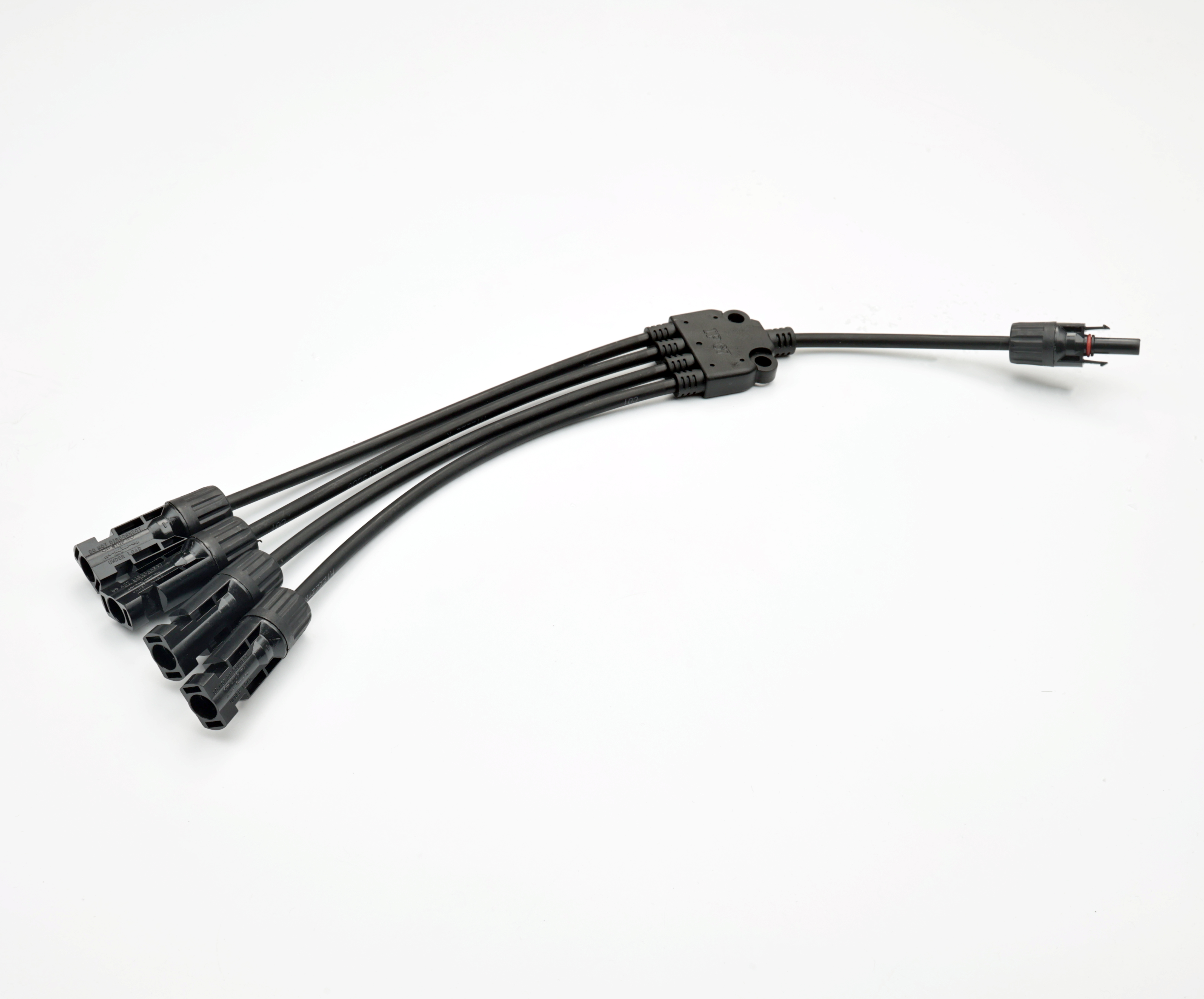
Waterproof electrical connector accessories for solar installations are not catalog fillers. They carry DC power between modules, combiner boxes, inverters, storage racks, and enclosures while keeping out water, dust, UV, salt and temperature stress. A failed cable gland or MC4-style connector can stop power production, create a safety risk, and increase the total cost of an installation.
One useful reference is Zhejiang Gutai Connector Co., Ltd., commonly known as Gutai. Based in Yueqing, Zhejiang, China, Gutai is a manufacturer of cable glands, solar MC4 connectors, mini waterproof boxes and connectors, watertight corrugated connectors, flexible pipe fittings, and related electrical accessories. Its export markets include the Middle East, Southeast Asia, India, Pakistan, the EU, the United Kingdom, and the United States.
Why solar installations need more than an ordinary connector accessory
A solar installation is not a dry, temperature-controlled lab. It is an outdoor DC power system with high voltage, direct sunshine, seasonal humidity, and mechanical vibration. Every point where a cable enters a junction box, or where two cables are joined, must provide electrical continuity, mechanical fixation, strain relief, and a seal against moisture.
For cable glands, IP68-rated sealing is the common benchmark because a cable entry may be exposed to rain, washing, or temporary immersion. For PV connectors, the connection must also maintain reliable contact, resist oxidation, and meet specific voltage and current requirements. PV connectors often use snap-in locking so installers can make quick and repeatable connections on site.
Field evidence from PV projects shows what can happen without this level of specification. In one 150 MW desert PV plant in the Middle East, the original imported connectors had an annual connector damage rate of roughly 8%. After the operator adopted 20,000 sets of anti-UV modified PA66 photovoltaic connectors from Gutai, the connector damage rate dropped below 1.2% over a three-year period. Downtime caused by connection failures fell by 70%, and cumulative maintenance and generation-loss savings exceeded USD 80,000.
Market and standards context
Market research helps explain why buyers are paying more attention to this category. Estimates place the global cable glands market at approximately USD 2.16 billion to USD 2.25 billion in 2024–2025, with forecasts ranging from USD 3.07 billion to USD 4.96 billion by 2034. The broader waterproof connector market was estimated at about USD 13.4 billion in 2024. Within solar, the global solar PV connector market was valued at roughly USD 1.31 billion in 2024, and MC4-type connectors account for about 68% of that solar connector segment.
Standards also affect specification. IEC 62444 and EN 62444 define construction and performance requirements for cable glands used in electrical installations. IEC 60529 defines IP68 as a protection level for continuous immersion under specified conditions. For PV connectors, buyers increasingly ask about certification paths under IEC 62852 rather than relying on a generic IP rating alone.
Selection criteria: matching MC4 connectors and cable glands to the installation
Start by separating the solar electrical system into connection zones. The first zone is module-to-module and string-to-combiner wiring, where MC4-style connectors are common. The second zone is the physical cable entry into combiner boxes, junction boxes, inverters, and control cabinets, where cable glands are needed. The third zone is conduit and flexible pipe protection, where watertight corrugated fittings, hose fittings, and related accessories protect the cable route.
MC4 connector electrical rating
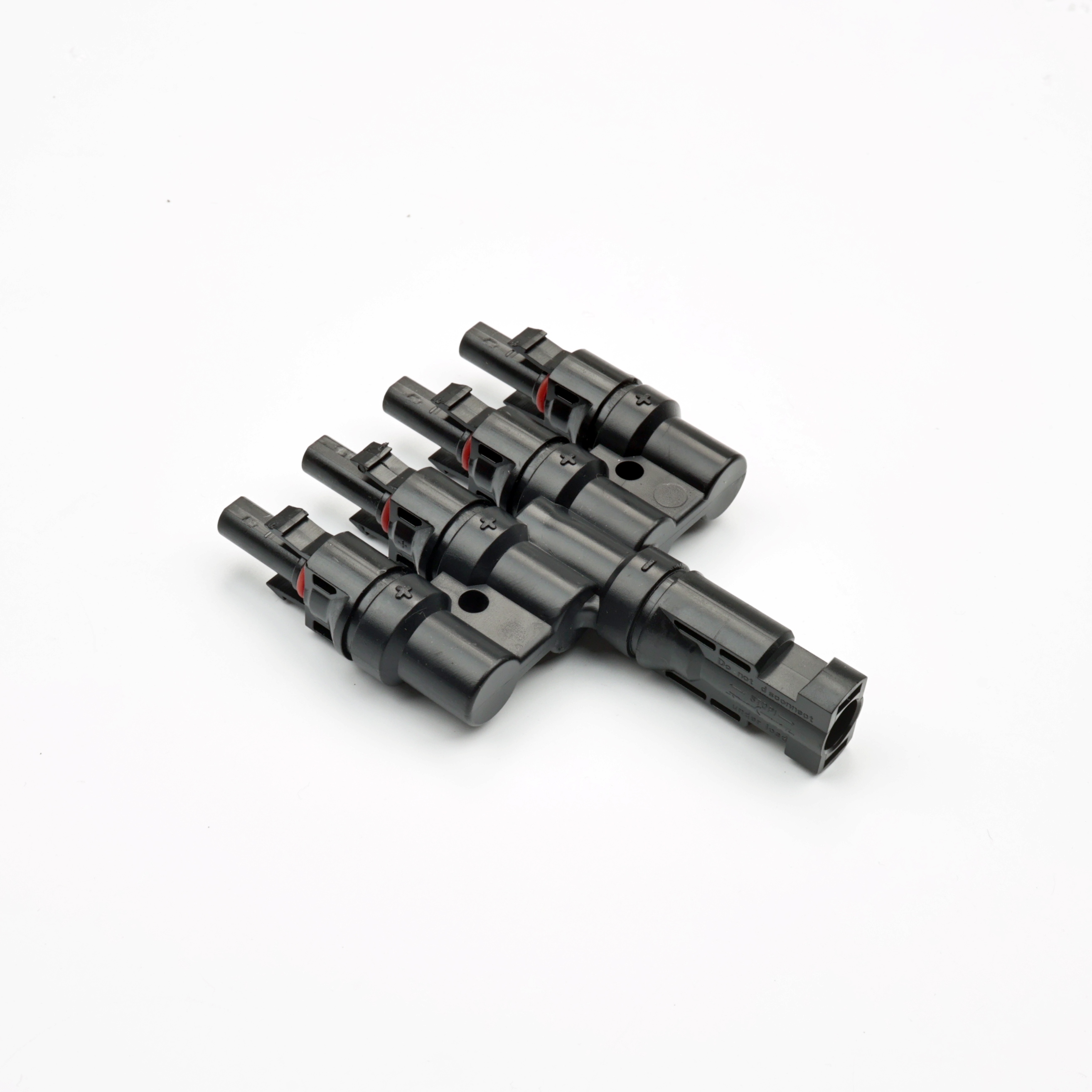
Gutai’s MC4 connector family includes 1000V and 1500V DC versions, plus Y-type and T-type branch connectors. In the standard 1000V DC version, rated current is 30A for 2.5mm², 4mm², and 6mm² cables, and 45A for 4mm² and 6mm² cables. Test voltage is 6kV at 50Hz for one minute. Connector contact resistance is no more than 0.5mΩ, and terminals are tin-plated copper or silver-plated copper. Insulation housing material is PC/PPO with a UL94-V0 flammability rating.
Those values allow an engineer to compare the connector against the actual PV string voltage and current instead of assuming that all MC4-compatible parts are equal.
Ingress protection and temperature range
The 1000V DC MC4 connector is rated IP67 in the mated condition and IP2X for touch protection when unmated. It has an ambient temperature range of -40°C to +85°C under IEC conditions, with an upper temperature limit of +105°C. The cable glands supplied by Gutai are rated IP68 and use nylon PA66 with NBR sealing parts. Static operating temperature for these glands is -40°C to +100°C, with peak instantaneous temperature up to +120°C. Dynamic conditions are rated at -20°C to +80°C with a peak of +100°C.
For a solar installation, the temperature rating matters because enclosure surfaces under the sun can become much hotter than the surrounding air. The connector and cable gland must continue to seal and hold the cable when the material heats and cools repeatedly.
Material and environmental resistance
Material selection should follow the site environment. Gutai uses UL-approved nylon PA66 for cable gland components A/C/E/F and NBR for sealing parts B/D. The glands are designed to withstand salt spray, acid, alkali, alcohol, grease, and common solvents. For severe solar sites, Gutai has supplied anti-UV modified PA66 housings with high-temperature fluororubber seals for desert conditions. In a related coastal EV charging project, Gutai supplied IP68 metal connectors made with 304 stainless steel and a dual-seal anti-loosening structure to resist salt fog, sea wind, and vibration.
Housing materials for Gutai MC4 connectors are PC/PPO, which contributes to flame retardancy and insulation performance. Terminals are copper with tin or silver plating, and silver-plated terminals are useful when low and stable contact resistance is required over a long outdoor service life.
Thread type and cable range
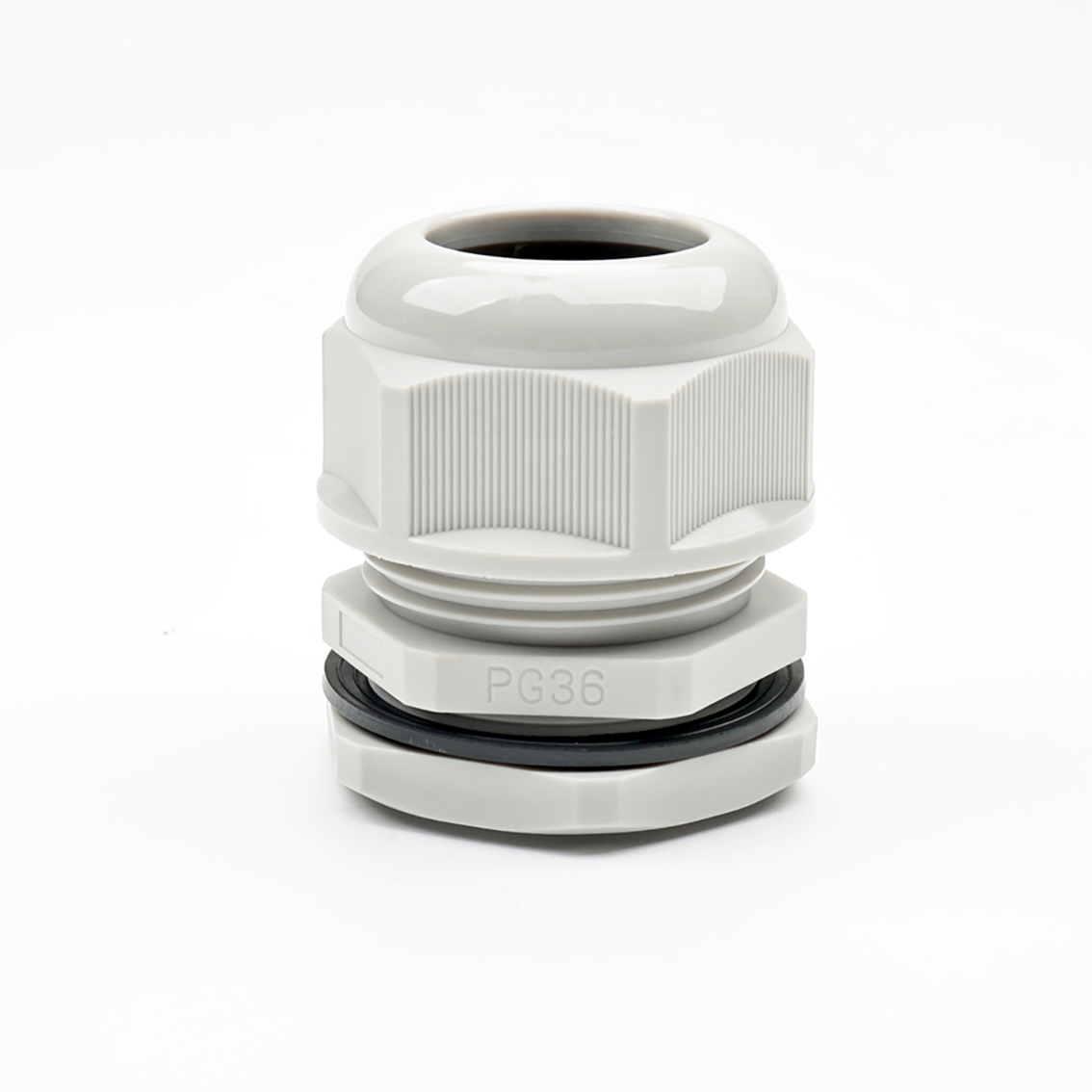
For a cable gland, the thread type and cable range are as important as the IP rating. Gutai’s Metric cable gland series covers M12 to M63 with thread outside diameter from 12mm to 63mm and thread length from 9mm to 21mm. The PG cable gland series covers PG7 to PG48 with thread outside diameter from 12.5mm to 59.3mm. Both families can clamp cables with outside diameters from 3mm to 45mm.
Choose a gland by matching the actual cable diameter to the clamping range on the datasheet. If the gland is too wide, the seal cannot compress evenly. If the gland is too narrow, the cable may not fit or the clamp may damage the outer sheath.
Step by step: from project requirement to connector accessory spec
- Document the cable route. Identify where each cable enters an enclosure, where PV strings are joined, and where conduit or flexible pipe changes connection. Note cable outside diameter, conductor cross-section, thread size, and expected exposure.
- Define electrical and environmental limits. Record the PV string voltage, operating current, ambient temperature extremes, UV level, salt-fog risk, rainfall, and any washing requirements.
- Select the MC4 connector or branch connector. Use the DC voltage, current, insulation material, and contact resistance to select between straight connectors, Y-type, or T-type branches.
- Select the cable gland by thread and cable range. Check Metric, PG, NPT, or G-type compatibility with the enclosure or panel. Match the cable outside diameter to the gland’s clamping range.
- Verify material and certification evidence. Ask for material data, CE/RoHS/REACH/IP68 documentation, UL-approved material evidence, and any project-specific certification path needed for PV connectors.
- Test samples with real components. Request samples and install them on actual cable and enclosure specimens. Verify sealing, pull-out resistance, and assembly time before committing to large quantities.
- Audit production and quality control. Confirm whether the supplier can handle OEM customisation, small trial orders, lead time, and inspection procedures. Gutai’s quality control includes 100% full dimension inspection.
Project evidence from two outdoor DC environments
Desert PV plant in the Middle East
Gutai supplied 20,000 sets of anti-UV modified PA66 photovoltaic connectors for a 150 MW PV power plant in a desert environment. The solution was built around the site’s specific risks: intense UV, high surface temperature, and wind-driven sand. The connector housings passed 1,000-hour UV aging tests, and the seals were made with high-temperature fluororubber that maintained sealing performance under 70°C surface heat. Silver-plated terminals helped keep contact resistance low. Over three years, the annual connector damage rate dropped from about 8% for the original imported products to below 1.2%, and downtime caused by connection failures decreased by 70%.
Coastal outdoor DC fast charging project in Europe
The same outdoor-DC logic applies to coastal EV charging stations. Gutai supplied the first batch of 5,000 sets of IP68 metal waterproof connectors for coastal outdoor DC fast charging piles. Those connectors used 304 stainless steel and a dual-seal anti-loosening structure, and they passed 1,000-hour salt spray tests and IEC 60068-2-6 vibration tests. In 18 months of operation, connector-related electrical failure fell from 18% per year to 2.6% per year, annual maintenance cost per station dropped from over RMB 500 to below RMB 80, and installation efficiency for new stations increased by 35%.
Component comparison table for solar project planning
| Component family | Project function | What to verify | Gutai data from product files |
|---|---|---|---|
| Solar MC4 connectors | PV string interconnection, DC circuit connection, storage and combiner wiring | Rated voltage, current, contact resistance, housing flame class, ingress protection, terminal plating | 1000V and 1500V DC line options; standard data includes 1000V DC, 30A/45A, ≤0.5mΩ, PC/PPO housing, UL94-V0, IP67 mated, IP2X unmated |
| MC4 Y/T branch connectors | Parallel string or branch connection in PV wiring | DC rating, branch connector type, housing material, sealing after repeated mating | Y-type and T-type connectors are available in the same MC4 connector family |
| Metric nylon cable glands | Cable entry into junction boxes, inverters, and control cabinets | Thread size, cable clamping range, IP rating, operating temperature, chemical resistance | M12-M63; cable range 3-45mm; thread OD 12-63mm; IP68; nylon PA66 and NBR; static -40°C to +100°C |
| PG nylon cable glands | Enclosure entries in PG-thread panels and European-style equipment | PG thread size, cable range, sealing performance, temperature limits | PG7-PG48; cable range 3-45mm; thread OD 12.5-59.3mm; IP68; same PA66 and NBR material system |
| Hose, conduit and flexible pipe accessories | Sealed cable routing through conduit or flexible pipe systems | Pipe and cable diameter match, sealing in wet or dusty locations, chemical compatibility | Gutai supplies hose fitting AD quick connectors, watertight corrugated connectors, flexible pipe accessories, and mini waterproof boxes/connectors as part of its range |
FAQ
How do I choose a waterproof electrical connector accessories manufacturer for solar installations?
Start with the installation environment and electrical conditions. Confirm the PV voltage and current, cable diameter, enclosure thread standard, and required IP rating. Then compare MC4 connector materials, terminal plating, contact resistance, UV resistance, and the manufacturer’s certification evidence. For cable glands, check that the thread size and cable clamping range match the actual cable. Finally, request samples and test them with real cable and enclosure components before scaling to a full project order.
What certification evidence should a solar-side supplier provide?
Look for CE, RoHS, REACH, and IP68 documentation, UL-approved material evidence for nylon components, and project-specific material certificates where required. For PV connectors, ask whether the manufacturer can support an IEC 62852 certification path or provide pre-test data. In Gutai’s case, core cable gland products are documented with CE, RoHS, REACH, and IP68, and the nylon PA66 material is UL approved.
How can a manufacturer reduce seal aging and terminal oxidation outdoors?
Several design choices reduce these long-term risks. Gutai uses UV-resistant modified PA66 housings in its PV connector platform and reports 1,000-hour UV aging test results. Seals are made from silicone or fluororubber, with no cracks and only a 5 Shore A hardness increase after 500 hours at 100°C. Terminals use high-conductivity copper alloy with silver plating for lower contact resistance and stronger oxidation resistance. Adding dual sealing rings and anti-loosening design further reduces the chance of water ingress after thermal cycling and vibration.
Next step: validate with your cable and enclosure
The shortest route to a lower-risk specification is sample validation. Gutai accepts small trial orders, supports OEM/ODM customisation for sizes, thread specifications, materials, colors, packaging, and labeling, and applies 100% full dimension inspection to production. Gutai’s monthly capacity for MC4 connectors is 100,000 sets, and its monthly capacity for cable glands is 500,000 pieces.
For a solar project, ask to test a sample against the actual cable diameter and enclosure thread. Contact Vincy Wang at vincy@gt-connector.com or by WhatsApp/Tel at +86-13676576672. The latest product catalogue is available for reference: Download the Gutai product catalogue (PDF).
Have Questions or Need More Details?
Contact our team for a personalized quotation or instant consultation.
Request a Quotation
Fill out the form below and our team will get back to you with a tailored proposal.
WhatsApp Direct Chat
Prefer to chat in real-time? Message us on WhatsApp for instant assistance & quick answers.
- Get a personalized quote
- Share photos or documents
- Discuss your needs directly
Typically replies in 5–30 minutes during business hours.