PG vs. Metric Cable Glands: A Buyer's Comparison Guide for Waterproof Connector Accessories
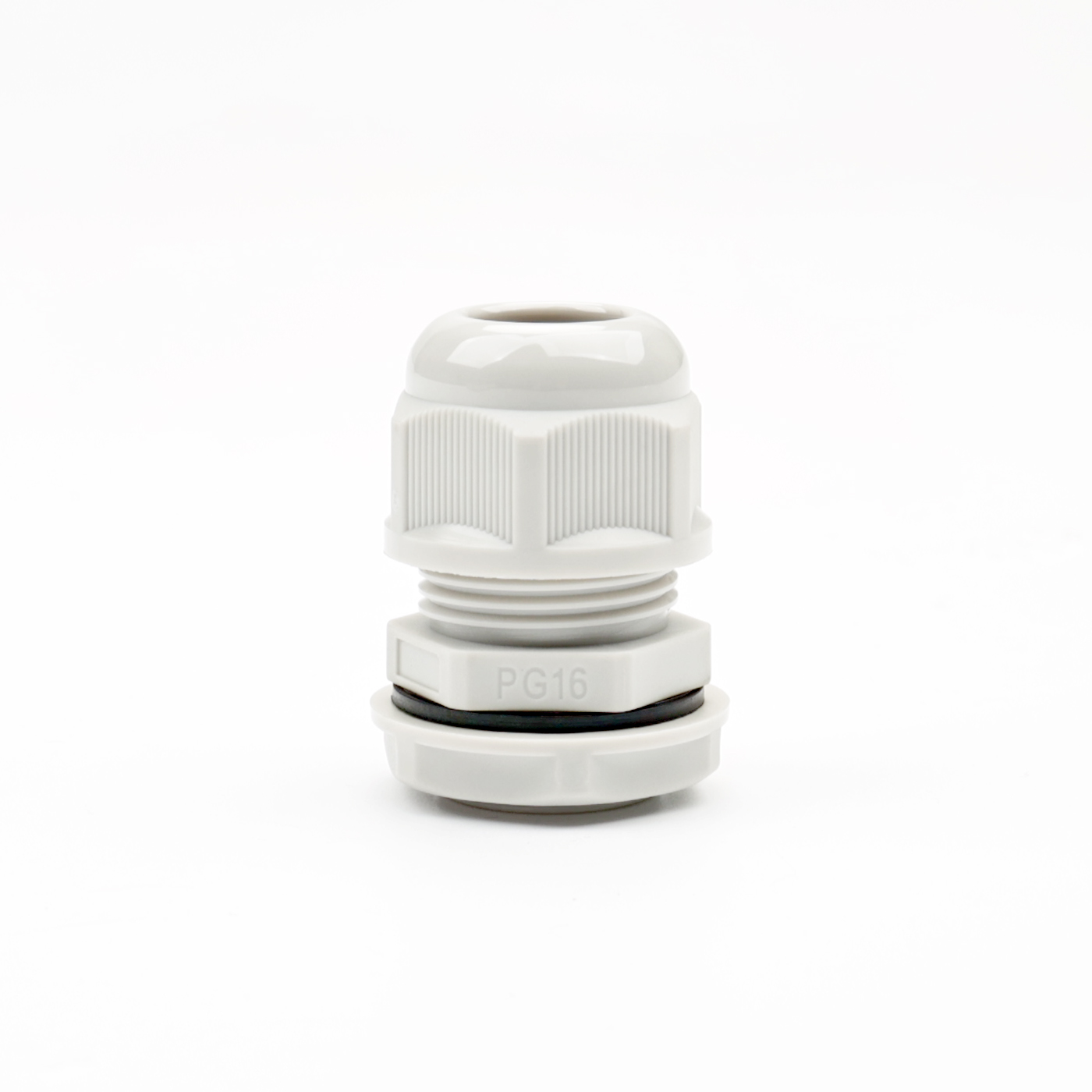
A PG-thread gland (PG16, 8.5–14 mm cable range). In most projects the thread on the enclosure, not the gland itself, decides which waterproof connector accessory gets ordered. Image: Zhejiang Gutai Connector Co., Ltd.
PG or Metric? For most buyers the question is already answered before they open a catalogue — by the thread already cut into the enclosure, panel or junction box. What stays open is whether the gland fits that thread, covers the cable actually being run, and can still be re-ordered in three years without changing the housing or the certificate.
Zhejiang Gutai Connector Co., Ltd. (Gutai) is a manufacturer of waterproof cable glands and waterproof connector accessories based in Yueqing City, Wenzhou, Zhejiang, China, and produces both thread families. The PG series spans PG7 to PG48 with 12.5–59.3 mm outer diameters; the Metric series spans M12 to M63 at 12–63 mm. Both reach a 3–45 mm cable entry range, both are built on a Nylon PA66 body with NBR sealing, and both are rated IP68. The thread is what changes — and it determines fit, certification paperwork, spare-part stocking and, for distributors, the shape of a multi-year product programme.
The Problem: A Thread Mismatch Is a Programme-Level Failure
A PG gland will not start on a Metric entry, and a Metric gland will not start on a PG entry. Where the two diameters look close enough that someone tries anyway, the result is a damaged enclosure thread and a gland that engages only partway. Partial engagement compresses the seal unevenly and creates a leak path at the gland-to-enclosure joint rather than at the cable — which is why this pattern is often reported as a sealing failure when it is really a thread decision made too late.
The cost does not stop at the first unit. Once a site stocks two thread families, every additional standard multiplies SKU lines, spare parts, kit variants and installer training. Distributors feel this most directly, because their customers rarely buy a single standard: legacy European machinery arrives with PG entries, new cabinets arrive with Metric entries, and both can sit in the same warehouse in the same month.
A third layer appears at the purchase-order stage. Certification coverage is not automatically identical across the two families. EU-facing coverage under EN 62444:2013 and US-facing coverage under a UL 514B Notice of Completion are documented per series, so releasing an order without checking the exact series and size on the certificate can create a compliance gap that no amount of product quality will close.
Industry Background: Why PG and Metric Still Coexist
Two thread standards remain in active production because two generations of equipment remain in active service. New industrial, infrastructure and renewable-energy projects are specified predominantly in Metric thread, while PG thread persists across a large installed base of European machinery, older control cabinets and instrument housings that are maintained rather than replaced.
The market context supports that dual demand. The global cable glands market was valued at approximately USD 2.16–2.25 billion in 2024–2025, with published 2034 forecasts ranging from about USD 3.07 billion to USD 4.96 billion depending on scope and methodology (Straits Research; Spherical Insights). Asia Pacific is the leading regional market, accounting for roughly 38–42% of global revenue, driven mainly by industrialisation in China and India (Dataintelo; Straits Research). The wider waterproof connector market was valued at about USD 13.4 billion in 2024, with projections of USD 25.48 billion by 2033 at a 7.4% CAGR (AOHUA / industry intelligence; estimates vary by methodology).
Standards provide the fixed frame around that demand. EN 62444, which replaced the older BS EN 50262, governs the construction and performance requirements for cable glands used in electrical installations. IP68, defined under IEC 60529, remains the benchmark ingress protection rating for waterproof connector accessories, requiring the device to withstand continuous immersion in water under specified conditions.
For a buyer this reframes the comparison. Thread standard is an inherited variable, fixed by the enclosure; performance is a modern variable, defined by material, sealing design, ingress rating and certification. That is why the two families can be technically comparable and still completely non-interchangeable.
What Actually Differs Between PG and Metric Cable Glands — and What Does Not
Six attributes change between the two families: thread type, thread dimensions, outer-diameter range, the equipment generations each series tends to serve, the certification document that covers it, and the stocking logic behind it. Six attributes do not change: the material platform, the sealing method, the IP rating, the temperature window, chemical resistance, and the production system behind the parts.
Thread type and thread dimensions
PG thread is a legacy European trapezoidal profile (Panzergewinde) that remains common on older European machinery, control cabinets and instrumentation housings. Metric thread follows the ISO metric profile used in most current enclosure designs. The two are not interchangeable at similar nominal sizes: pitch and flank geometry differ, so a gland that is “close” in diameter still will not seat correctly.
Gutai’s thread specifications cover PG, Metric, NPT and G-type standards, with dozens of sizes from M8 up to M63 and matching cable entry ranges. For a buyer, that means one-stop selection across power, signal and communication interfaces instead of sourcing each thread type from a different vendor.
Outer diameter and cable range
PG7 to PG48 glands carry outer diameters of 12.5–59.3 mm. M12 to M63 glands carry outer diameters of 12–63 mm. Both families support cable entry from 3 mm to 45 mm. The practical consequence is that sizing should run from two directions at once — the enclosure thread and the cable’s outer diameter — rather than from the gland’s nominal trade size, because the same nominal size can bracket different cable ranges across families.
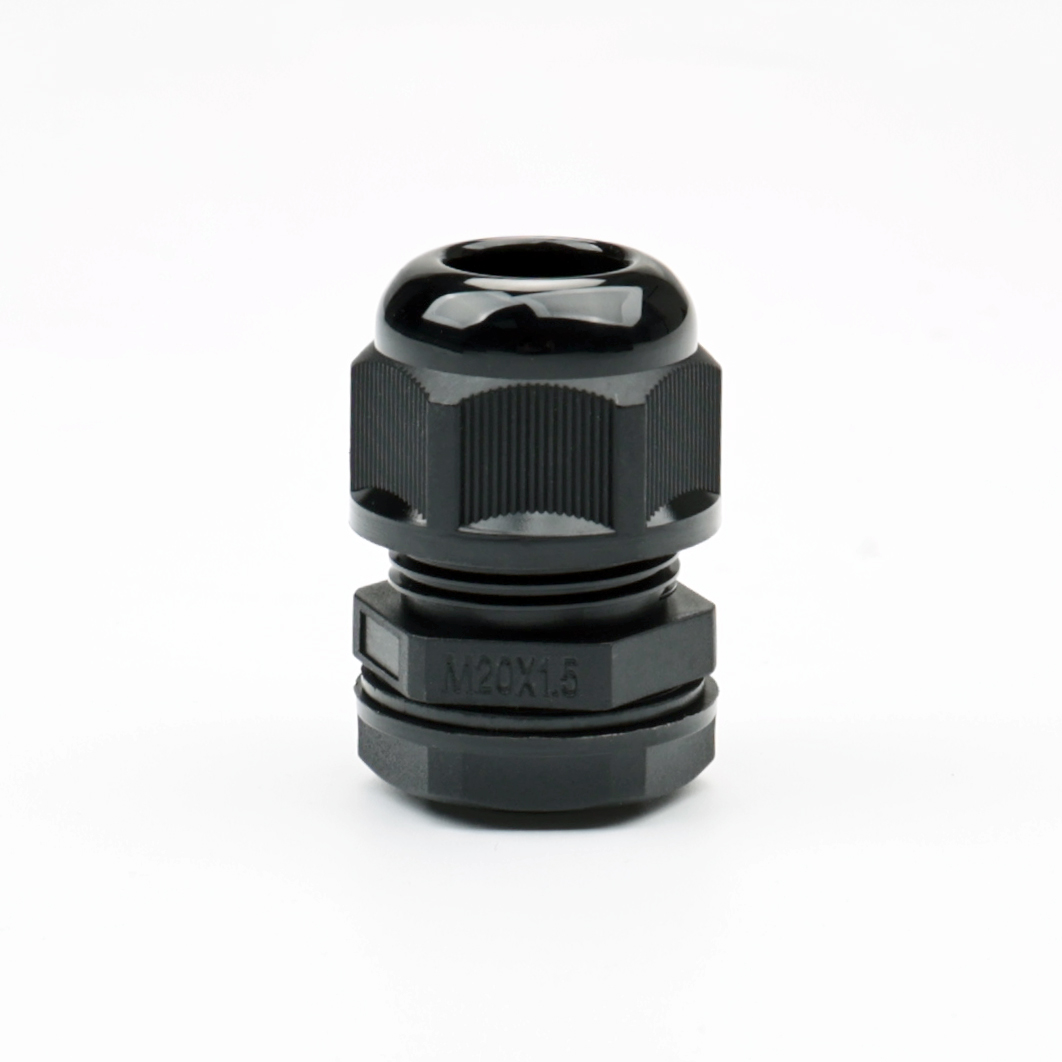
Metric side of the comparison: an M20 gland with an 8.5–14 mm cable range. The metric size describes the thread diameter; the cable range is set by the sealing insert and nut. Image: Zhejiang Gutai Connector Co., Ltd.
The shared construction platform
Nylon PA66 body with NBR sealing is common to both series. IP68 protection is common to both. The operating window is common to both: -20°C to 80°C in dynamic applications and -40°C to 100°C in static installations. Resistance to salt spray, acid, alkali, alcohol, grease and common solvents is common to both.
Sealing reliability across the range comes from the design rather than from the thread. Gutai glands use a dual-seal ring with pre-installed O-rings and anti-slip threads — a configuration intended to reduce sealing failures caused by installation technique rather than by material choice.
Certification coverage, series by series
This is the difference most often missed in a price comparison. CE coverage for the metric and PG series is documented to EN 62444:2013, and US coverage is documented through a UL 514B Notice of Completion. The two documents serve different markets and are not substitutes for one another. An EU-facing project should confirm the CE EN 62444:2013 declaration for the exact series and size being purchased; a US-facing project should confirm the UL 514B Notice of Completion for that same item. Gutai’s core products additionally hold CE, RoHS, REACH and IP68 protection-level test reports, with production running under ISO9001:2015.
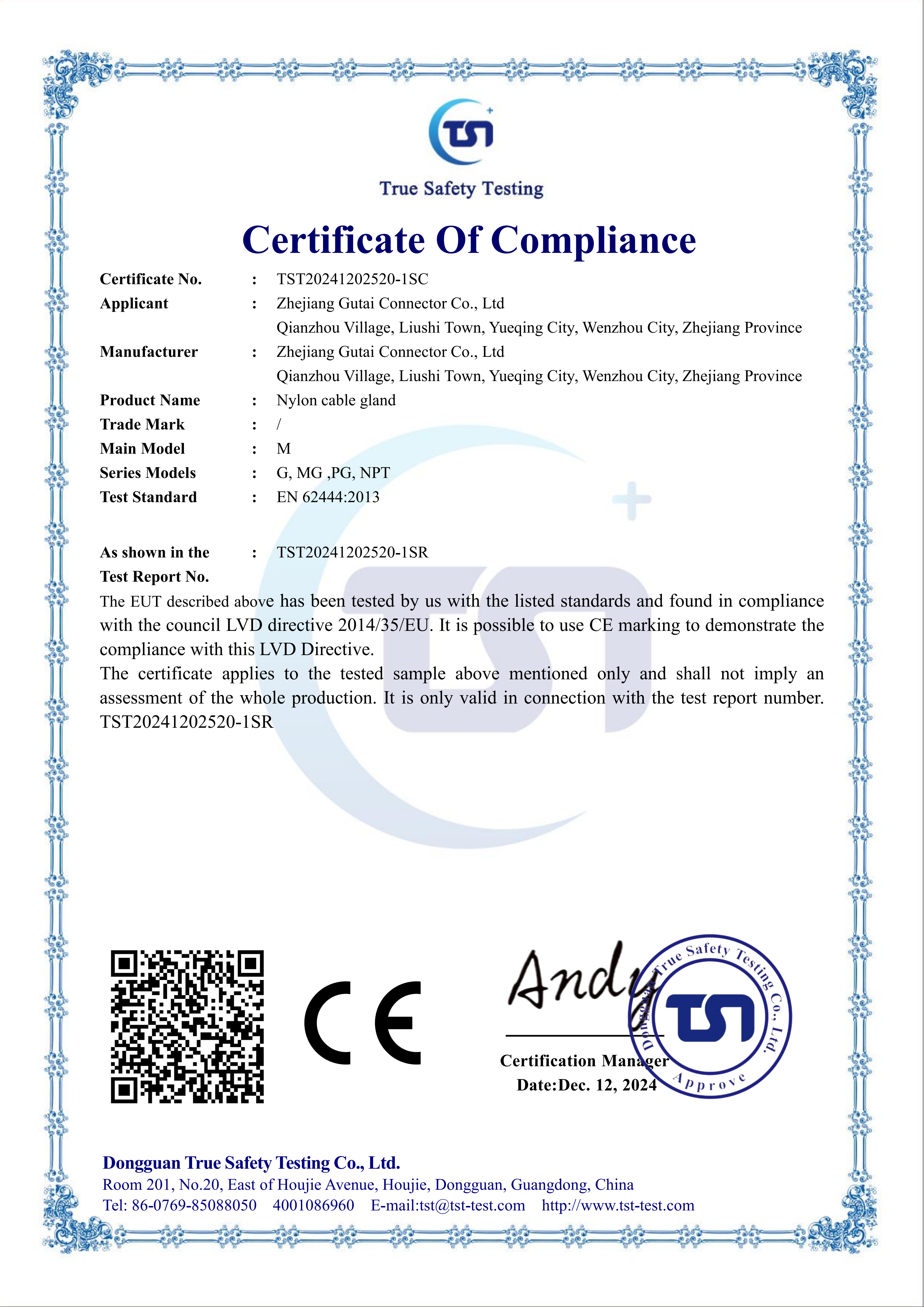
CE documentation referencing EN 62444: coverage is listed per series and size, so the certificate should always be checked against the exact item on the order. Image: Zhejiang Gutai Connector Co., Ltd.
A Six-Step Selection Sequence: From Enclosure Thread to Supply Programme
Buyers at the decision and execution stage can work through the same sequence regardless of project type. Each step closes a failure mode that would otherwise surface after delivery.
- Read the thread on the enclosure first. Measure the thread’s outer diameter and pitch, or match it against a known standard gauge. Starting from the gland catalogue encourages nominal-size comparisons that ignore pitch — the most common reason a gland threads in halfway and stops.
- Confirm the thread form, not only the diameter. PG, Metric, G and NPT entries can present similar diameters. Because Gutai’s range covers all four, form-level confirmation can happen at the quotation stage instead of the installation stage.
- Size on the cable’s outer diameter. Across both families the supported cable range runs from 3 mm to 45 mm. Select the gland whose range brackets the measured cable OD with margin, because the seal compresses against the jacket, not against the conductor.
- Match the service environment. Check the dynamic (-20°C to 80°C) and static (-40°C to 100°C) temperature windows against the installation, and confirm that resistance to salt spray, acid, alkali, alcohol, grease and common solvents covers the chemicals actually present.
- Verify certification for the exact series and size. Confirm CE EN 62444:2013 for EU-facing projects and the UL 514B Notice of Completion for US-facing projects, on the document that names the item being bought. This is where PG and Metric orders most often diverge.
- Build the supply programme, not just the order. Consolidate the thread standards you intend to carry, validate samples, and fix commercial terms: MOQ of 1 unit, FOB or EXW delivery, pre-shipment test as the acceptance criterion, and payment by T/T, cash or Alipay.
Where Each Thread Standard Does the Most Work
Legacy European equipment and retrofit projects. Where the enclosure thread is already PG, the gland choice is effectively predetermined. The useful comparison in that situation is between suppliers of PG glands, not between thread standards — and the deciding criteria become cable range, certification and repeat supply.
New-build OEM and export-oriented cabinets. New designs are typically specified in metric thread. Here the gland should be selected at the design stage, before the enclosure is ordered, because the housing thread is the harder item to change later.
Mixed-fleet distributors and MRO warehouses. This is where the two-series question becomes commercial. A supplier covering PG, Metric, G and NPT lets a distributor serve both installed bases from one stock position. In one documented case an automotive electronics customer reduced inventory categories by 65% and emergency procurement costs by 30% after consolidating on Gutai’s full series, and shortened new product development cycles by two weeks using free selection guidance and custom sampling.
Outdoor, coastal and process environments. For both families the protection comes from the shared platform: the IP68 rating, the dual-seal ring design, and resistance to salt spray, acid, alkali, alcohol, grease and common solvents.
Panel builders and system integrators. Where a single panel mixes power, signal and communication interfaces, one-stop thread coverage from M8 to M63 reduces the number of purchase orders raised and the number of certificates that have to be filed.
PG vs. Metric Cable Glands: Side-by-Side Comparison
| Comparison point | PG series | Metric series |
|---|---|---|
| Thread type | Legacy European trapezoidal thread (Panzergewinde) | ISO metric thread profile |
| Size range (Gutai) | PG7 – PG48 | M12 – M63 |
| Outer diameter | 12.5 – 59.3 mm | 12 – 63 mm |
| Cable entry range | 3 – 45 mm | 3 – 45 mm |
| Other thread options available | Metric, PG, G and NPT across the range | Metric, PG, G and NPT across the range |
| Body and sealing material | Nylon PA66 body, NBR seal | Nylon PA66 body, NBR seal |
| Ingress protection | IP68 (IEC 60529) | IP68 (IEC 60529) |
| Temperature range | -20°C to 80°C dynamic; -40°C to 100°C static | -20°C to 80°C dynamic; -40°C to 100°C static |
| Environmental resistance | Salt spray, acid, alkali, alcohol, grease, common solvents | Salt spray, acid, alkali, alcohol, grease, common solvents |
| Certification coverage | CE EN 62444:2013; UL 514B Notice of Completion — confirm series and size on the document | CE EN 62444:2013; UL 514B Notice of Completion — confirm series and size on the document |
| Production system | ISO9001:2015 | ISO9001:2015 |
| Typical decision trigger | Enclosure already threaded PG | Enclosure already threaded metric |
Frequently Asked Questions
Do PG and Metric cable glands carry the same certification coverage?
Not automatically, and the difference is documented rather than assumed. Gutai’s metric and PG series are covered by CE EN 62444:2013 and by a UL 514B Notice of Completion, but coverage is listed per series and per size. An EU-facing project should confirm the CE EN 62444:2013 declaration for the exact item; a US-facing project should confirm the UL 514B Notice of Completion for that same item. Gutai’s core products also hold CE, RoHS, REACH and IP68 protection-level test reports, and production follows ISO9001:2015.
Can one supplier cover PG, Metric, G and NPT threads for a mixed installation?
Yes, where the supplier’s thread range is broad enough. Gutai’s thread specifications cover PG, Metric, NPT and G-type standards, with dozens of sizes from M8 to M63 and matching cable entry ranges, supporting one-stop selection for power, signal and communication interfaces. In one documented case an automotive electronics customer reduced inventory categories by 65% and emergency procurement costs by 30% after adopting the full series, and shortened new product development cycles by two weeks with free selection guidance and custom sampling.
What are the purchasing terms for a first order?
Gutai’s purchasing terms are MOQ of 1 unit, delivery on FOB or EXW terms, and payment by T/T, cash or Alipay. The acceptance criterion is a pre-shipment test. For project quantities, the commercial variables that move most are the number of thread standards consolidated into one order, the number of SKUs carried afterwards, and whether sampling is required before release.
Can we validate samples before committing to a PG or Metric order?
Yes. Gutai provides free selection guidance and supports custom sampling, with acceptance built around pre-shipment testing. For thread-critical projects, samples should be checked against the actual enclosure thread and against the cable outer diameter that will be used on site, because a gland that seals correctly on a bench can still be the wrong thread form for the housing it is intended for.
What should distributors look for in a long-term waterproof electrical connector accessories manufacturer?
Three things matter: range breadth, production control and continuity. Zhejiang Gutai Connector Co., Ltd. covers cable glands, solar connector MC4, mini waterproof boxes and connectors, and hose fitting series including AD quick connectors, watertight corrugated connectors and flexible pipe. Production runs from a 5,000 m² facility with 80 employees, a 10-engineer R&D team and an annual output of 10,000,000 units, with 80% of output exported to the Middle East, Southeast Asia, India, Pakistan, the EU, the UK and the USA. OEM production is accepted, and one-to-one technical support is provided throughout the order cycle. Distributors evaluating a programme can request samples, a quotation or the 2025 catalogue to test fit, documentation and lead time before committing to a stocking plan.
Conclusion: The Thread Comes First, the Programme Comes Second
The PG versus Metric decision looks like a technical detail and behaves like a programme decision. The thread must match the enclosure; the cable range must bracket the cable; the certification document must name the exact series and size; and the supplier must still be able to deliver the same part when the next batch of housings arrives.
On those four tests, the choice between the families is settled by the enclosure, while the choice between suppliers is settled by range, documentation and continuity. Zhejiang Gutai Connector Co., Ltd. manufactures both families from a 5,000 m² facility with 80 employees, a 10-engineer R&D team and an annual output of 10,000,000 units, with 80% of production exported to the Middle East, Southeast Asia, India, Pakistan, the EU, the UK and the USA. OEM production is accepted, and the thread range covers Metric, PG, G and NPT from M8 to M63.
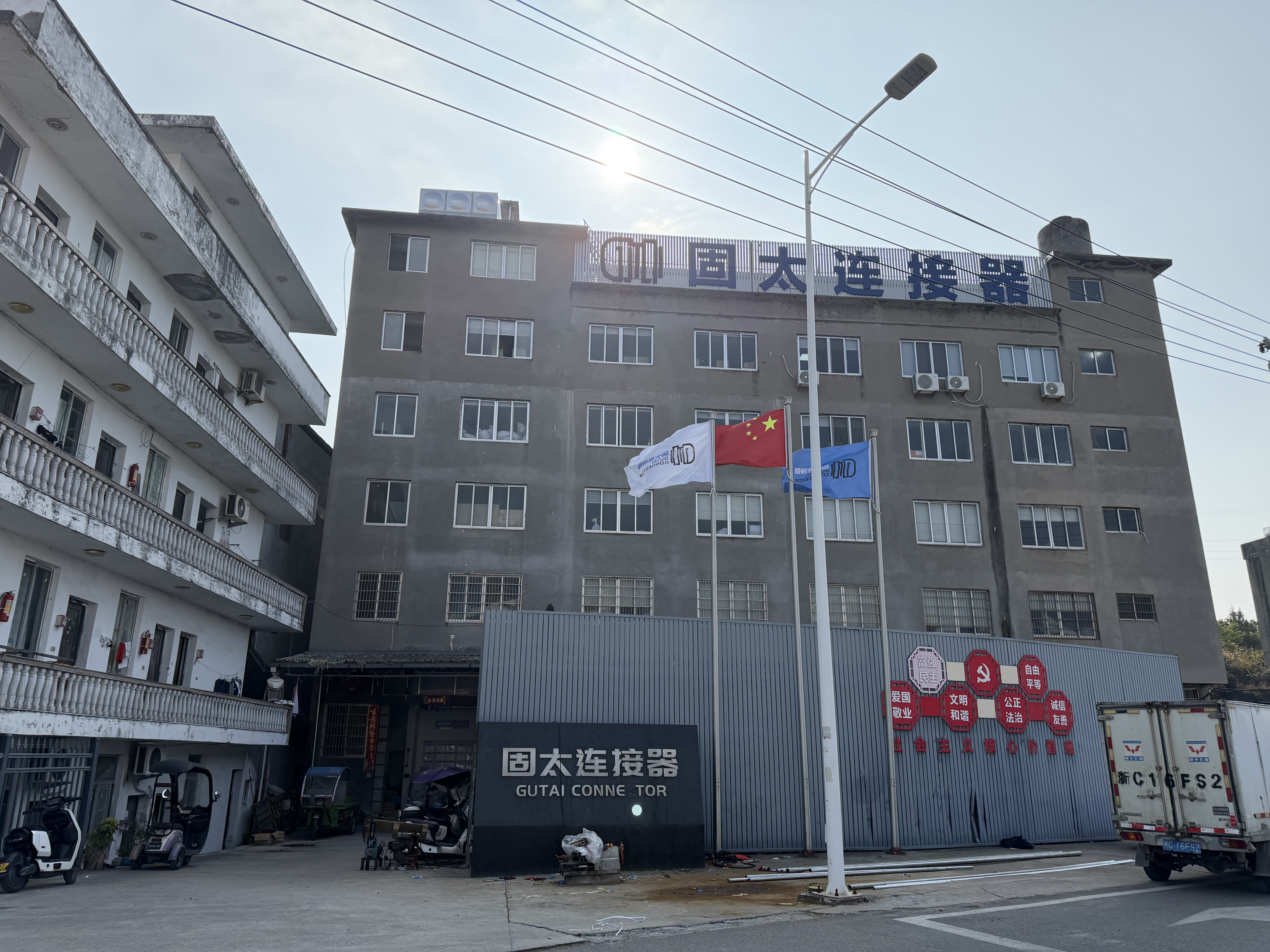
Zhejiang Gutai Connector Co., Ltd., Qianzhou Industrial Zone, Liushi Town, Yueqing City, Wenzhou, Zhejiang, China. Image: Zhejiang Gutai Connector Co., Ltd.
Next step: samples, quotation or catalogue
Send the enclosure thread form, the thread dimensions and the cable outer diameter, and Gutai’s team will confirm the matching PG or Metric size, the certification document that applies and the available lead time.
Email: vincy@gt-connector.com | Tel / WhatsApp: 0086-13676576672 | Website: www.gt-connector.com
Download the 2025 product catalogue (PDF): Gutai catalogue
Have Questions or Need More Details?
Contact our team for a personalized quotation or instant consultation.
Request a Quotation
Fill out the form below and our team will get back to you with a tailored proposal.
WhatsApp Direct Chat
Prefer to chat in real-time? Message us on WhatsApp for instant assistance & quick answers.
- Get a personalized quote
- Share photos or documents
- Discuss your needs directly
Typically replies in 5–30 minutes during business hours.