Solar MC4 Connectors vs. IP68 Cable Glands: A Waterproofing Comparison Guide
Solar MC4 Connectors vs. IP68 Cable Glands: A Waterproofing Comparison Guide
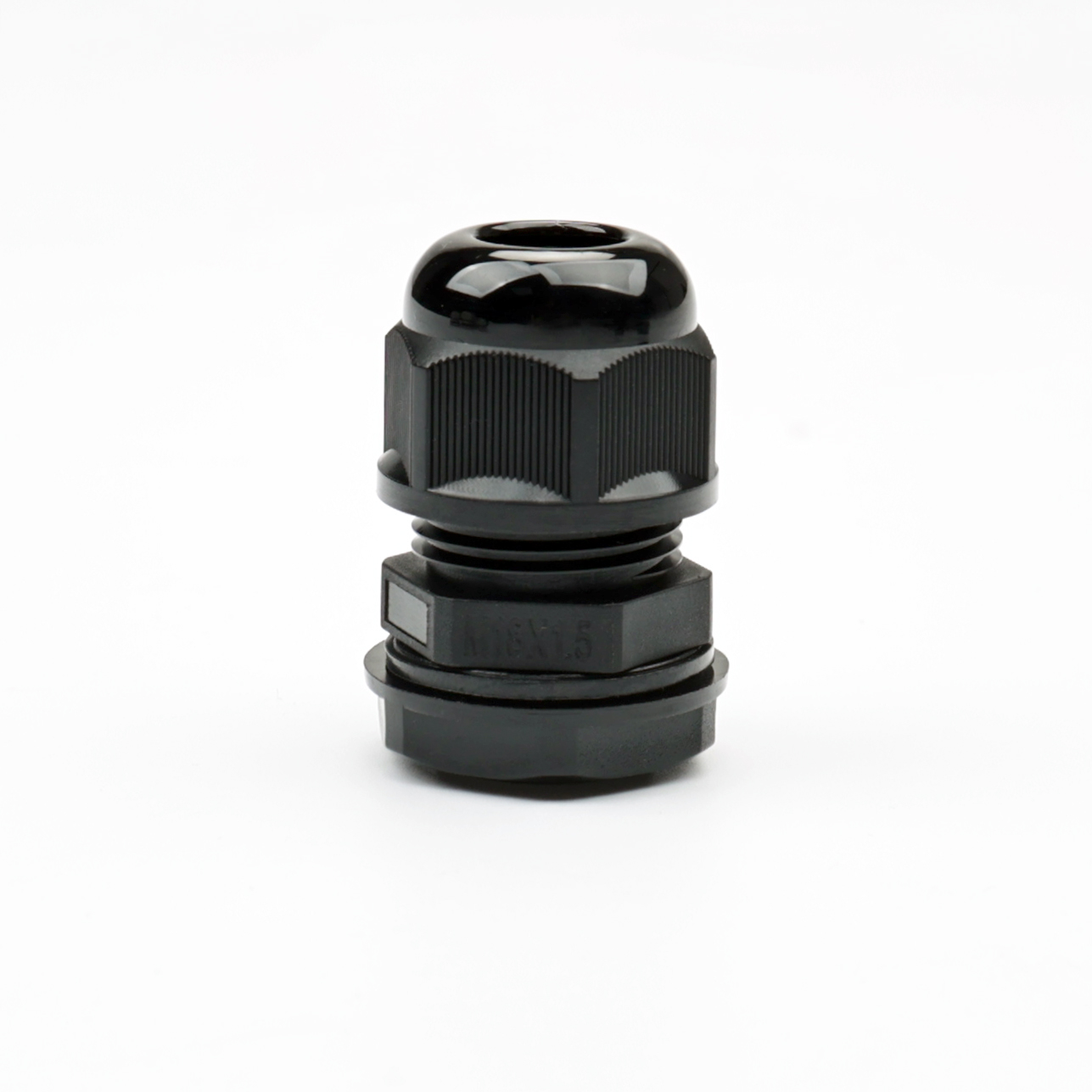
Two different components sit on the same solar or energy storage bill of materials, and both are sold as waterproof: Solar MC4 connectors and IP68 cable glands. Buyers often compare them as if one could replace the other. They cannot. An MC4 connector makes a mating, field-serviceable DC connection between two cables. A cable gland seals a fixed cable entry where a cable passes through the wall of an enclosure. This guide compares the two paths on the points procurement teams actually argue about: environmental rating, electrical limit, material, certification framework and application fit.
Both families are manufactured by Zhejiang Gutai Connector Co., Ltd. (Gutai), a Wenzhou-based maker of waterproof cable glands, Solar MC4 connectors, mini waterproof boxes and connectors, and hose fitting series such as AD quick connectors, watertight corrugated connectors and flexible pipe. The company runs a 5,000 square metre factory with 80 employees, 10 R&D engineers and an annual output of 10,000,000 units, with roughly 80% of output exported to the Middle East, Southeast Asia, India, Pakistan, the EU, the United Kingdom and the USA.
The short answer: choose by connection type first, confirm when the IP rating actually applies second, and match the certification framework to the destination market third. Gutai's Solar MC4 range is rated IP67 in the mated condition with a 1000 V DC / 30 A-45 A electrical rating, while the nylon cable gland range is IP68 rated, certified CE / RoHS / REACH / CCC, and covers Metric M12-M63 and PG7-PG48 threads. Neither protection number decides the application. The connection point does.
Problem Definition: Why One IP Number Cannot Settle This Comparison
The word waterproof compresses three separate questions into one, and buyers who skip them end up specifying the wrong component.
- When does the seal apply? A connector is sealed only while it is mated. A cable gland is sealed only when it is installed on the correct cable diameter and the correct thread.
- What is being protected? A connector protects a conductive joint that may be opened again in service. A gland protects the point where a cable crosses an enclosure wall, and it also provides mechanical fixation and strain relief.
- Which document proves it? Cable glands and PV connectors are qualified through different standards and test classes, so a certificate issued for one product does not transfer to the other.
That timing difference is visible in the product data. Gutai's Solar MC4 connector specification lists Protection Class IP67 together with Touch Protection IP2X in unmated status. In other words, the IP67 rating describes the mated pair, while a loose connector is covered only for touch safety. The nylon cable gland range is rated IP68, and its sealing logic is mechanical: a special clamping claw and rubber sealing structure compress the cable and the enclosure thread at the same time, which is why cable range and thread size decide whether the IP68 claim holds in a specific installation.
Industry Background: Two Mature Markets Behind One Wiring Diagram
The two paths are tracked as separate markets, which matters when you compare quotations from suppliers that only make one of them.
- The global cable glands market was valued at approximately USD 2.16 billion to USD 2.25 billion in 2024-2025, with 2034 forecasts ranging from roughly USD 3.07 billion to USD 4.96 billion depending on methodology and scope (Straits Research; Spherical Insights).
- Asia Pacific accounts for approximately 38% to 42% of global cable gland revenue, driven mainly by industrialisation in China and India (Dataintelo; Straits Research).
- The global solar PV connectors market was valued at approximately USD 1.31 billion in 2024, and MC4-type connectors dominate that segment with about a 68% share, equivalent to roughly USD 0.89 billion (Global Market Insights).
- The wider waterproof connector market was valued at approximately USD 13.4 billion in 2024 and is projected to reach USD 25.48 billion by 2033, a CAGR of 7.4% (AOHUA / industry intelligence).
The standards picture is equally split. Cable glands for electrical installations are governed by IEC 62444 and its European adoption EN 62444, which replaced the older BS EN 50262 (IEC; BSI). Ingress protection ratings such as IP68 come from IEC 60529, where IP68 requires a device to withstand continuous immersion in water under specified conditions (IEC). PV connectors sit outside the cable gland standard and are qualified through their own electrical, thermal, flammability and corrosion requirements.
The practical consequence is that a specification asking for IP68 at every connection point is incomplete. It is also why Gutai's application data lists the same project types against both families, including PV plant and panel cable entries, wind turbine cable outlets, EV charging station and distribution box entries, energy storage wiring, rail transit and telecom wiring, and industrial automation cable protection. The two are used at different points of the same system, not as substitutes.
The Two Families in Detail
Solar MC4 Connectors: DC Current, Mated Sealing, Snap-In Locking
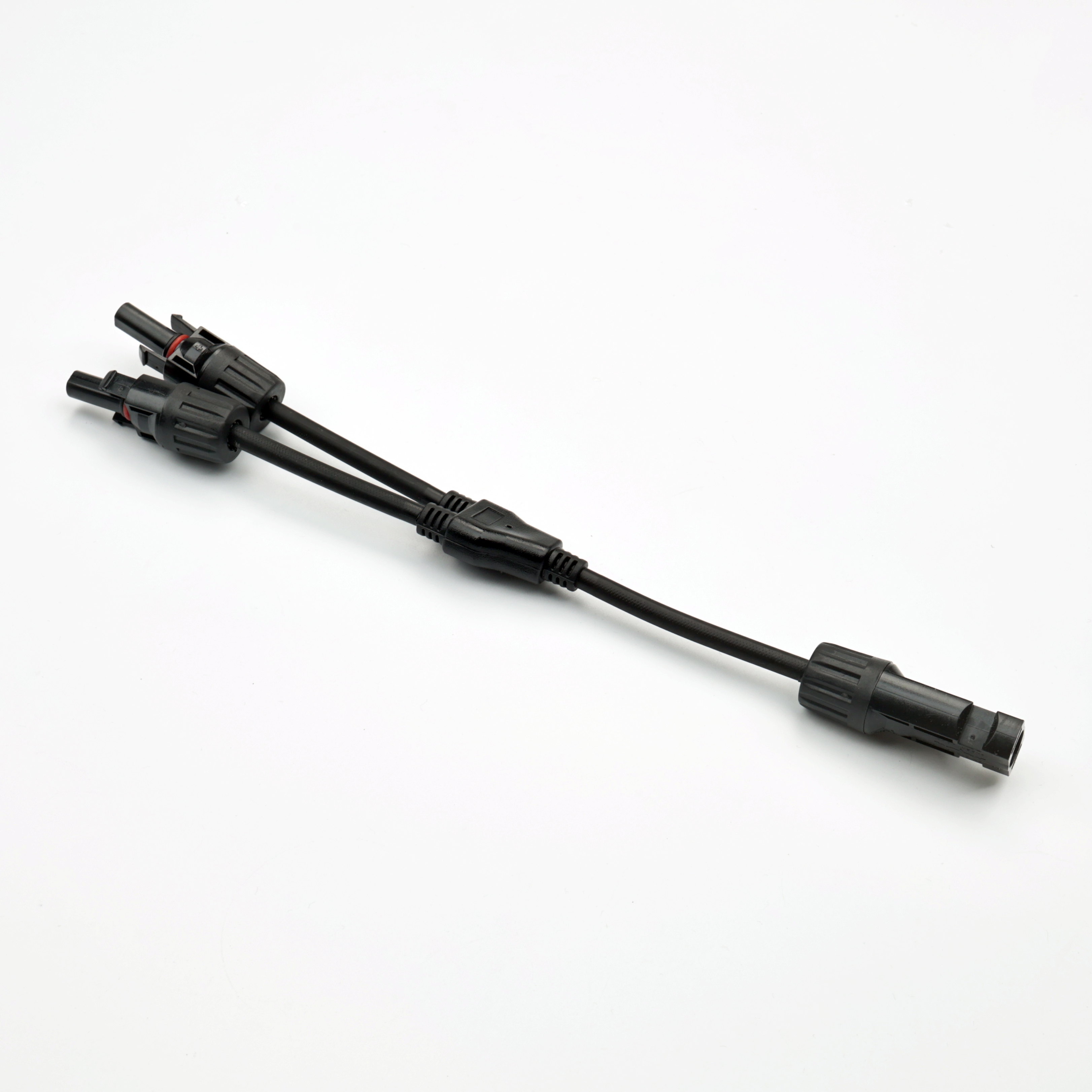
Gutai's Solar MC4 connector family covers four configurations: 1000 V MC4 connectors, 1500 V MC4 connectors, Y-type connectors and T-type connectors. The published specification for the 1000 V MC4 range is:
- Rated voltage: 1000 V DC
- Rated current: 30 A for 2.5 mm2, 4 mm2 and 6 mm2 (14 AWG, 12 AWG, 10 AWG); 45 A for 4 mm2 and 6 mm2 (12 AWG, 10 AWG)
- Metal plug system: 2.5 mm, 4 mm, 6 mm
- Test voltage: 6 kV (50 Hz, 1 min)
- Ambient temperature: -40 degrees C to +85 degrees C (IEC); -40 degrees F to +194 degrees F (UL); upper temperature limit +105 degrees C (IEC)
- Protection class: IP67; touch protection in unmated status: IP2X
- Contact resistance: 0.5 mOhm; safety class II
- Terminals: tin-plated copper or silver-plated copper; insulation housing: PC/PPO
- Locking system: snap-in; flammability rating: UL-94-V0
- Corrosion test class: IEC 60068-2-52
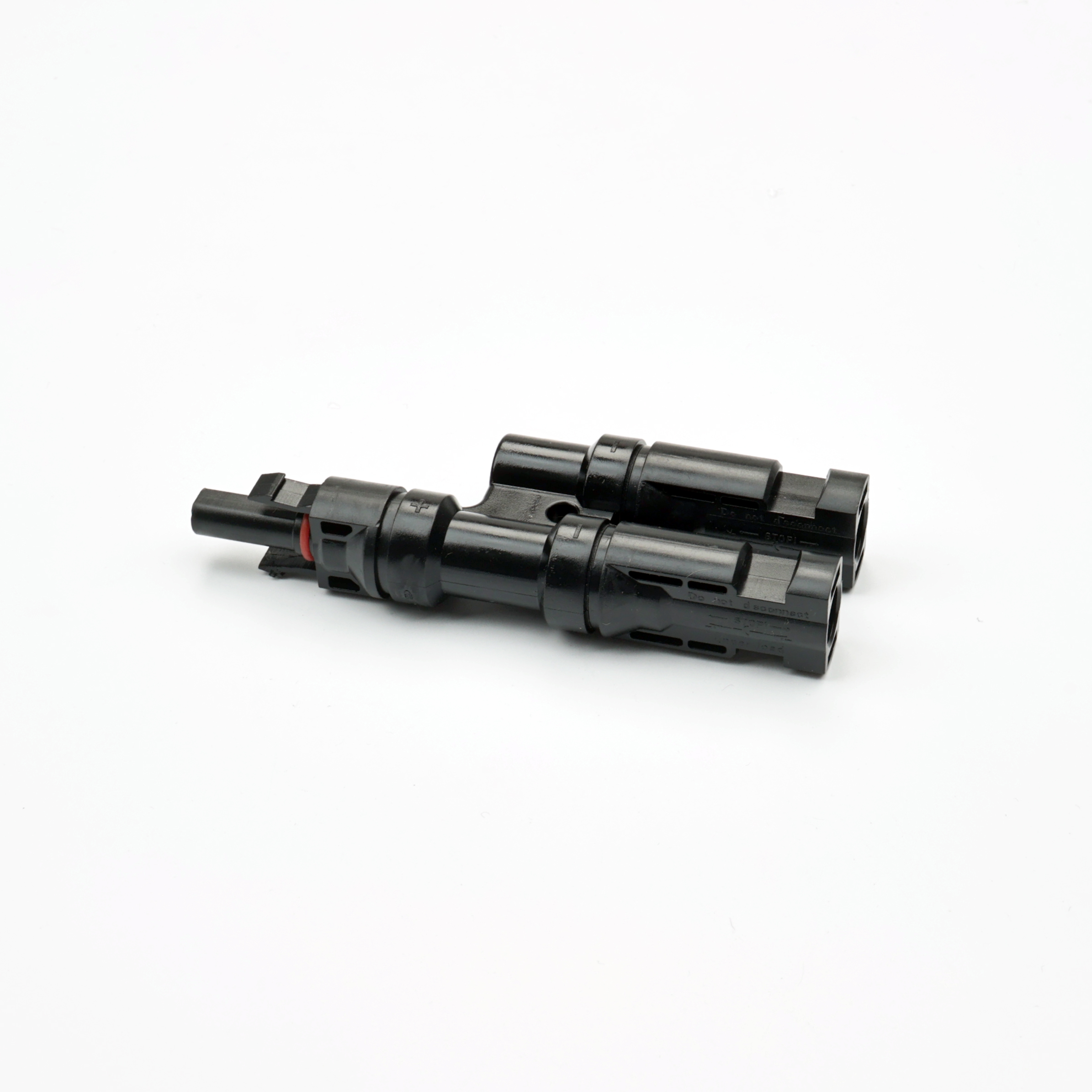
The intended applications are listed as photovoltaic energy storage, lithium energy storage systems, new energy vehicles, AGV and industrial automation equipment, outdoor portable power stations, marine equipment, communication base stations, engineering machinery, and other DC power connection scenarios.
The boundary condition matters as much as the ratings. Because IP67 applies to the mated condition, an MC4 connector is the wrong choice for a panel entry that stays open during installation or service, and it is the wrong choice where a cable has to be threaded through an enclosure wall. Where a joint must be repeatably plugged on site, the snap-in locking system and the IP2X touch protection of the unmated half are the reasons this family exists.
IP68 Cable Glands: Enclosure Sealing, Thread Coverage, Certification Breadth
The cable gland family is organised by thread system rather than by electrical rating, because a gland does not carry current. Gutai's two main series are:
- Metric series: thread size M12-M63, cable range 3-45 mm, thread outside diameter 12-63 mm, thread length 9-21 mm
- PG series: thread size PG7-PG48, cable range 3-45 mm, thread outside diameter 12.5-59.3 mm, thread length 9-21 mm
Construction and approval details published for the range:
- Body components A/C/E/F in UL-approved nylon PA66; sealing parts B/D in NBR (nitrile butadiene rubber) for sealing and oil resistance
- Certifications: CE, RoHS, REACH, IP68 and CCC
- Operating temperature: static -40 degrees C to +100 degrees C with peak instantaneous temperature up to 120 degrees C; dynamic -20 degrees C to +80 degrees C with peak instantaneous temperature up to 100 degrees C
- Thread options: Metric, PG, G thread and NPT
- Standard colours: black (RAL9005), light grey (RAL7035) and silver (RAL7001); custom colours available on request
- Resistance to salt spray, acid, alkali, alcohol, grease and common solvents
- Rated IP68 for waterproof and dustproof protection, with a clamping claw and rubber sealing structure providing pull-out resistance across a wide clamping range
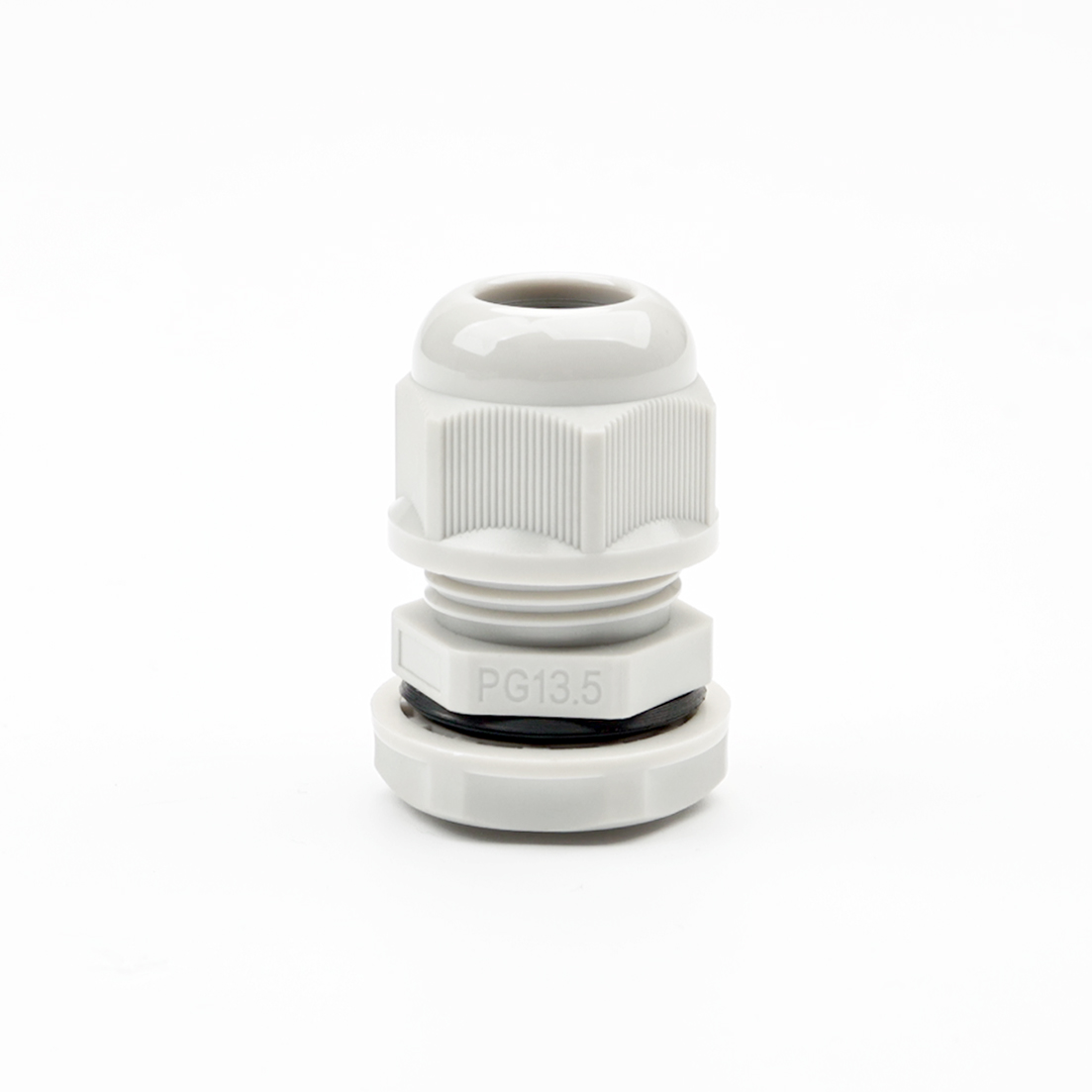
The industries listed for the gland range are the new energy sector, industrial automation and advanced manufacturing, construction and infrastructure, and marine engineering and shipbuilding. The range is also described as intended for waterproof electrical connector systems generally. The selection constraint here is mechanical rather than electrical: the cable outer diameter must fall inside the gland's cable range, and the thread must match the enclosure entry.
Side-by-Side Comparison Table
| Comparison point | Solar MC4 Connectors (Gutai) | IP68 Cable Glands (Gutai) |
|---|---|---|
| Job in the system | Mating DC connection between cables; can be plugged in the field | Fixed cable entry through an enclosure wall; sealing, fixation and strain relief |
| Protection rating | IP67 in the mated condition; IP2X touch protection when unmated | IP68 in the installed condition |
| Electrical rating | 1000 V DC; 30 A at 2.5/4/6 mm2, 45 A at 4/6 mm2; test voltage 6 kV (50 Hz, 1 min) | Not a current-carrying connector; the rating is mechanical and sealing-based |
| Temperature range | -40 degrees C to +85 degrees C (IEC); -40 degrees F to +194 degrees F (UL); upper limit +105 degrees C (IEC) | Static -40 degrees C to +100 degrees C (peak 120 degrees C); dynamic -20 degrees C to +80 degrees C (peak 100 degrees C) |
| Materials | Tin-plated or silver-plated copper terminals; PC/PPO insulation housing | UL-approved nylon PA66 body parts; NBR sealing parts |
| Size and thread range | 2.5 mm, 4 mm, 6 mm plug system; 1000 V, 1500 V, Y-type and T-type variants | Metric M12-M63; PG7-PG48; cable range 3-45 mm; thread length 9-21 mm |
| Standards and certificates | UL-94-V0 flammability; IEC 60068-2-52 corrosion test class; IEC and UL temperature ratings | CE, RoHS, REACH, IP68, CCC; IEC 62444 / EN 62444 is the cable gland standard for electrical installations (IEC; BSI) |
| Connection behaviour | Snap-in locking; designed for repeatable field mating | Screw-in; sealed for the installed life of the cable entry |
| Listed industries | PV and lithium energy storage, new energy vehicles, AGV and industrial automation, outdoor portable power stations, marine equipment, communication base stations, engineering machinery | New energy sector, industrial automation and advanced manufacturing, construction and infrastructure, marine engineering and shipbuilding |
| Wrong choice when | The connection is an enclosure entry, or the joint will be left unmated outdoors | The joint has to be plugged and re-plugged on site |
Read the table as two columns of constraints, not as a ranking. The rows where the two paths overlap, such as industry coverage, IP-rated sealing and wide temperature ranges, are exactly the rows that make the products look interchangeable in a catalogue. The rows where they diverge, such as connection behaviour, electrical rating and standards reference, are the ones that decide the specification.
Step-by-Step: How to Decide Which Path Fits Your Project
- Classify the connection point. If the cable ends in a pluggable joint that will be mated in the field, the connector path applies (1000 V MC4, 1500 V MC4, Y-type or T-type). If the cable terminates inside an enclosure and stays there, the gland path applies.
- Confirm when the seal is active. For MC4, IP67 applies mated and IP2X applies unmated. For glands, IP68 applies to a correctly sized and correctly installed assembly. Write that condition into the specification instead of writing only the number.
- Match the electrical and mechanical limits. Connector side: 1000 V DC, 30 A at 2.5-6 mm2 and 45 A at 4-6 mm2, with a 2.5 mm / 4 mm / 6 mm plug system. Gland side: cable range 3-45 mm and threads from M12 to M63 or PG7 to PG48, with thread lengths of 9-21 mm.
- Check the environment against temperature and corrosion data. MC4 connectors are rated -40 degrees C to +85 degrees C (IEC) with a +105 degrees C upper limit and corrosion test class IEC 60068-2-52. Glands are rated -40 degrees C to +100 degrees C static (peak 120 degrees C) and -20 degrees C to +80 degrees C dynamic (peak 100 degrees C), with resistance to salt spray, acid, alkali, alcohol, grease and common solvents, which is what marine and coastal installations listed in the gland's target industries depend on.
- Map certification to the destination market. For glands, the reference standard is IEC 62444 / EN 62444 (replacing BS EN 50262) and the published certificates are CE, RoHS, REACH, IP68 and CCC, with UL-approved PA66 material. For PV connectors, compliance runs through IEC 62852-related testing: Gutai can supply pre-test data and certification path planning, with full testing completed through domestic authorised laboratories. Fix the visible specification items at the same time, since standard colours are black RAL9005, light grey RAL7035 and silver RAL7001, and custom colours are available on request.
- Validate with samples before releasing the BOM. Sampling is the cheapest place to discover a wrong cable range or an incompatible thread. Gutai supports this stage with selection guidance and custom sampling services across both product families, so a sample can be produced to the thread, colour and cable range that your project specifies.
Application Fit: Where Each Option Belongs
Both families appear in the same project types, but at different points of the installation.
- PV plants and solar panel entries: glands at panel boxes, combiner boxes and inverter entries; MC4 connectors at the string-to-string and string-to-equipment DC joints. The roughly 68% share held by MC4-type connectors within the solar PV connector segment (Global Market Insights) reflects how standardised that joint has become, while the enclosure entry remains a gland decision driven by cable diameter and thread.
- Energy storage cabinets and lithium energy storage systems: glands for battery cabinet and enclosure entries; MC4 connectors for DC links inside and outside the cabinet, including Y-type and T-type configurations where a run has to be split.
- EV charging stations and distribution boxes: glands at charger enclosures and distribution box entries; connectors wherever a pluggable DC joint is required. Because chargers stand outdoors, the gland's salt spray, acid, alkali, alcohol and grease resistance belongs in the specification, not in an appendix.
- Marine engineering and shipbuilding: glands are listed for this industry and rated for salt spray and chemical exposure; MC4 connectors list marine equipment among their applicable industries, so DC joints on marine equipment are covered, while enclosure entries stay with the gland range.
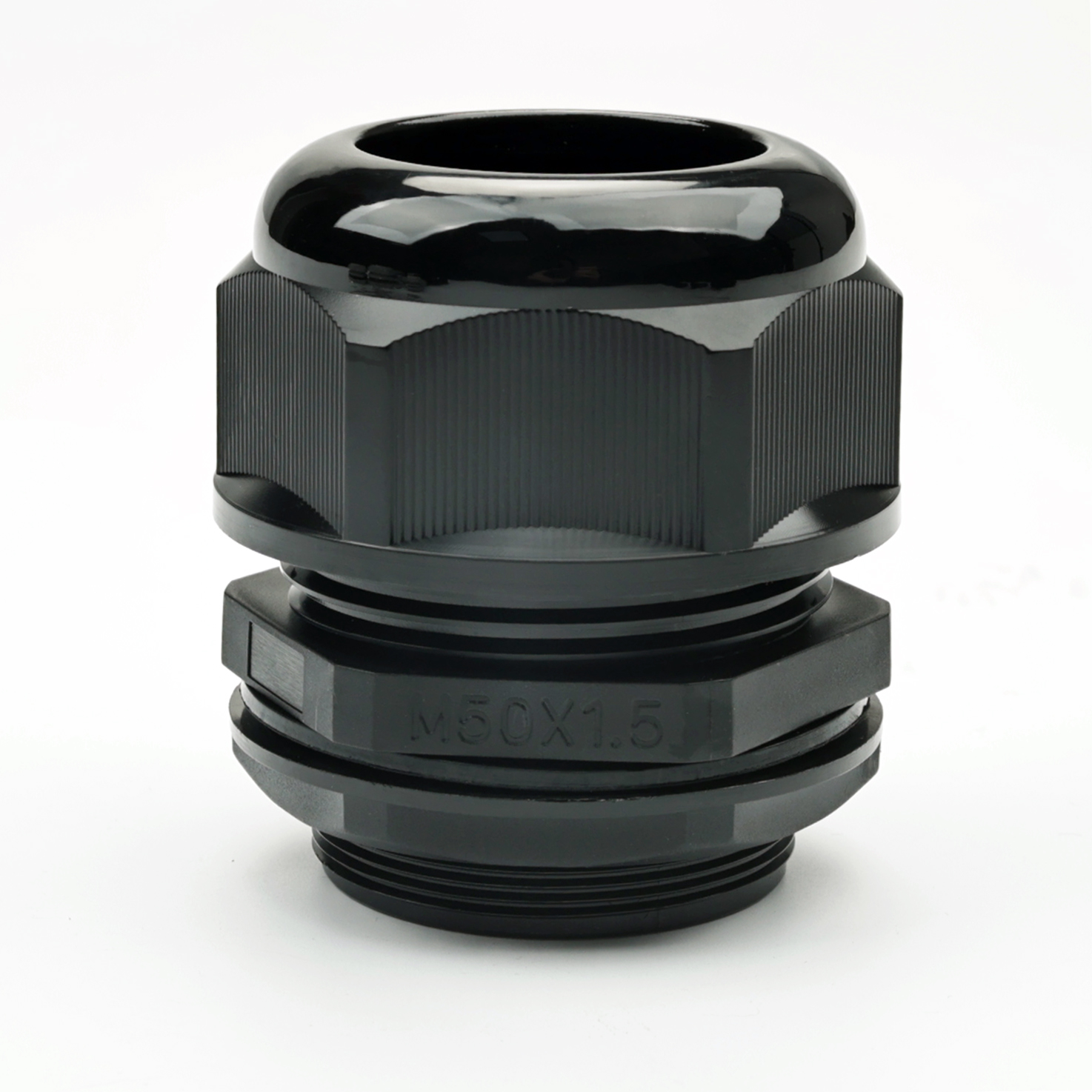
- Telecom base stations, rail transit and industrial automation: fixed cable entries in cabinets and control panels. The gland range covers cable from 3 mm to 45 mm, which is the practical reason one thread family can serve power, signal and communication interfaces.
- Outdoor portable power stations and engineering machinery: MC4 connectors cover these DC scenarios, and the IP2X touch protection of the unmated half matters during assembly on site.
Frequently Asked Questions
Which certification framework applies to Solar MC4 connectors and to IP68 cable glands?
They are different frameworks and cannot be swapped. Cable glands for electrical installations are governed by IEC 62444 and its European adoption EN 62444, which replaced BS EN 50262, while ingress protection levels such as IP68 are defined in IEC 60529 (IEC; BSI). Gutai's nylon cable glands are certified with CE, RoHS, REACH, IP68 and CCC, and the nylon PA66 material is UL approved. Solar MC4 connectors fall outside the cable gland standard: Gutai's 1000 V MC4 range is specified with UL-94-V0 flammability, IP67 protection in the mated condition, corrosion test class IEC 60068-2-52, and IEC / UL temperature ratings of -40 degrees C to +85 degrees C (IEC) and -40 degrees F to +194 degrees F (UL). For projects that must document IEC 62852 alignment, Gutai provides pre-test data and certification path planning, with full testing carried out through authorised laboratories.
Can one manufacturer supply both MC4 connectors and IP68 cable glands?
Yes, and that is how Gutai's range is structured. Zhejiang Gutai Connector Co., Ltd. manufactures cable glands, Solar MC4 connectors, mini waterproof boxes and connectors, and hose fitting series including AD quick connectors, watertight corrugated connectors and flexible pipe. Thread coverage spans Metric, PG, G thread and NPT families, with Metric sizes from M12 to M63, PG sizes from PG7 to PG48 and a cable range of 3-45 mm. Sourcing both families from one manufacturer means one qualification process, one incoming inspection routine and one set of interface documents for the DC joints and the enclosure entries in the same project.
What drives the cost of each option?
Material content and size drive cost in both families, which is why an IP number alone is a poor cost guide. On the connector side, the plug system (2.5 mm, 4 mm or 6 mm), the terminal plating (tin-plated or silver-plated copper), the housing material (PC/PPO) and the current rating (30 A or 45 A) set the specification. On the gland side, thread size (M12 to M63, or PG7 to PG48), body and seal materials (UL-approved nylon PA66 with NBR sealing parts) and finishing choices such as standard black RAL9005, light grey RAL7035 or silver RAL7001, with custom colours available on request, set the specification. Name those choices, the destination market and the certificates the project requires in the inquiry: two quotations are only comparable when cable range, thread and certification are fixed in advance.
What should I check on a sample before placing a volume order?
Validate against the connection point, not against the IP number. For the MC4 path, confirm that the mated IP67 condition matches how the connectors will be handled on site, then check the electrical match: 1000 V DC, 30 A at 2.5/4/6 mm2 and 45 A at 4/6 mm2, with a 2.5 mm / 4 mm / 6 mm plug system. For the gland path, measure the actual cable outer diameter and place it inside the 3-45 mm cable range, then confirm the enclosure thread (M12-M63 or PG7-PG48) and the thread length (9-21 mm). Gutai supports this stage with selection guidance and custom sampling services, so the sample can be produced to the thread, colour and cable range that your project specifies instead of a generic part.
What supply capability should I confirm before committing to a volume order?
Confirm production scale, documentation and export experience before the first volume order. Zhejiang Gutai Connector Co., Ltd. operates a 5,000 square metre factory with 80 employees, 10 engineers in the R&D team and an annual output of 10,000,000 units; approximately 80% of output is exported to the Middle East, Southeast Asia, India, Pakistan, the EU, the United Kingdom and the USA. Where a project needs both connectors and glands, request a single quotation covering both families so that cable ranges, thread sizes and certificates can be compared line by line. The full range is described in the Gutai product catalogue, and specifications, samples or a quotation can be requested at vincy@gt-connector.com.
Conclusion: Match the Component to the Connection Point
Solar MC4 connectors and IP68 cable glands are not competing answers to the same question. They are two connection types that a single PV, storage or EV charging project usually needs at different points. Choose the connector path where a DC joint has to be mated in the field at 1000 V DC, with IP67 protection in the mated condition, UL-94-V0 flammability and corrosion test class IEC 60068-2-52. Choose the gland path where a cable enters an enclosure and must stay sealed, with IP68 protection, a cable range of 3-45 mm and a thread from M12 to M63 or PG7 to PG48. Write the certification framework into the specification rather than assuming it: IEC 62444 / EN 62444 for cable glands, connector-level ratings and IEC 62852-related testing for PV connectors. Sourcing both from one production base removes the interface ambiguity between them, because cable ranges, threads and certificates then come from the same manufacturer.
Next Step
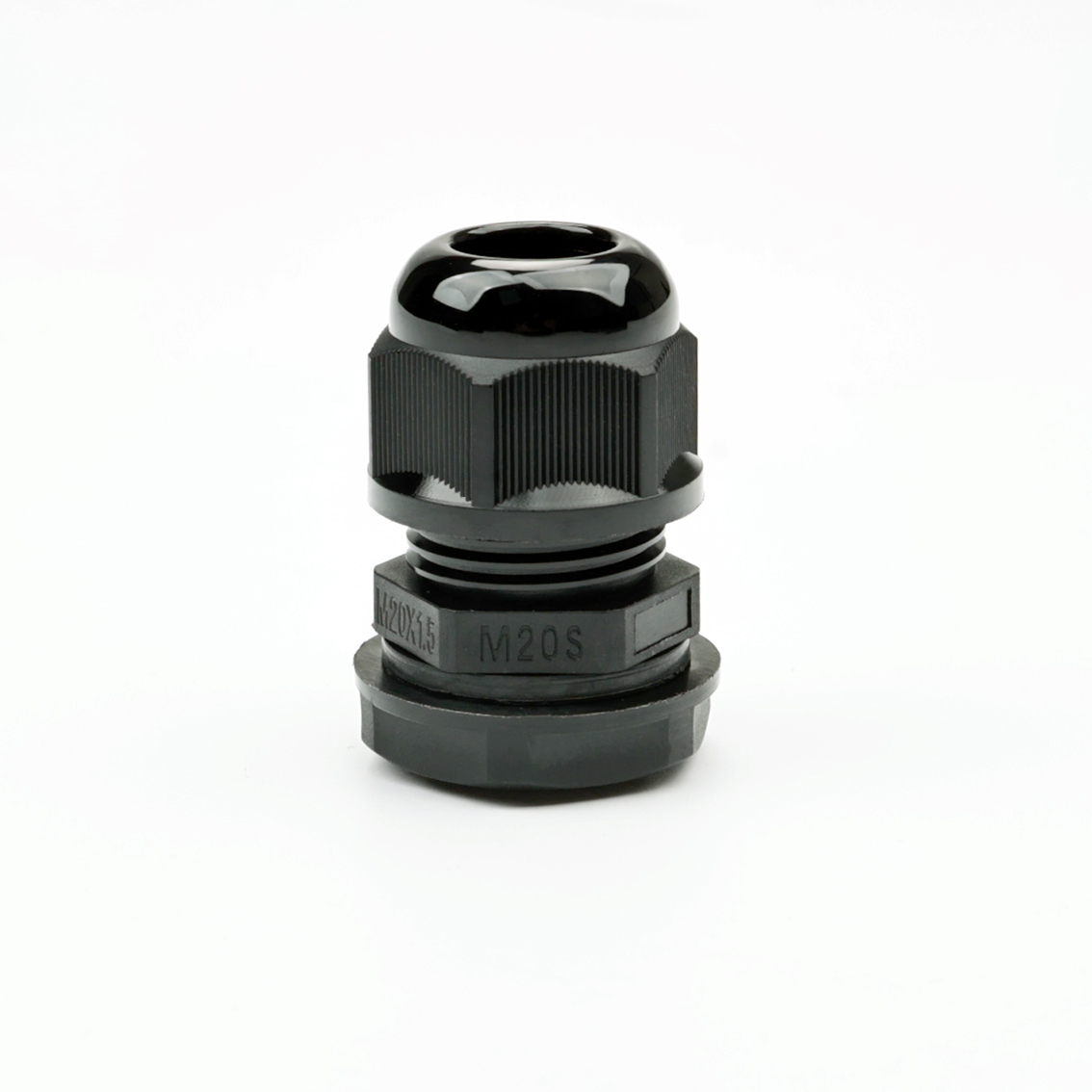
Send the cable outer diameter, the enclosure thread and the destination market for each connection point, and Gutai will return a specification-matched recommendation covering both product families, with the relevant certificates identified before you commit to a volume order.
- Product catalogue (PDF): Gutai cable glands, Solar MC4 connectors and waterproof connector accessories
- Website: www.gt-connector.com
- Email: vincy@gt-connector.com | Tel and WhatsApp: 0086-13676576672
Have Questions or Need More Details?
Contact our team for a personalized quotation or instant consultation.
Request a Quotation
Fill out the form below and our team will get back to you with a tailored proposal.
WhatsApp Direct Chat
Prefer to chat in real-time? Message us on WhatsApp for instant assistance & quick answers.
- Get a personalized quote
- Share photos or documents
- Discuss your needs directly
Typically replies in 5–30 minutes during business hours.