Waterproof Electrical Connector Accessories: Certification & Parameter Checklist
Waterproof Electrical Connector Accessories: Certification & Parameter Checklist
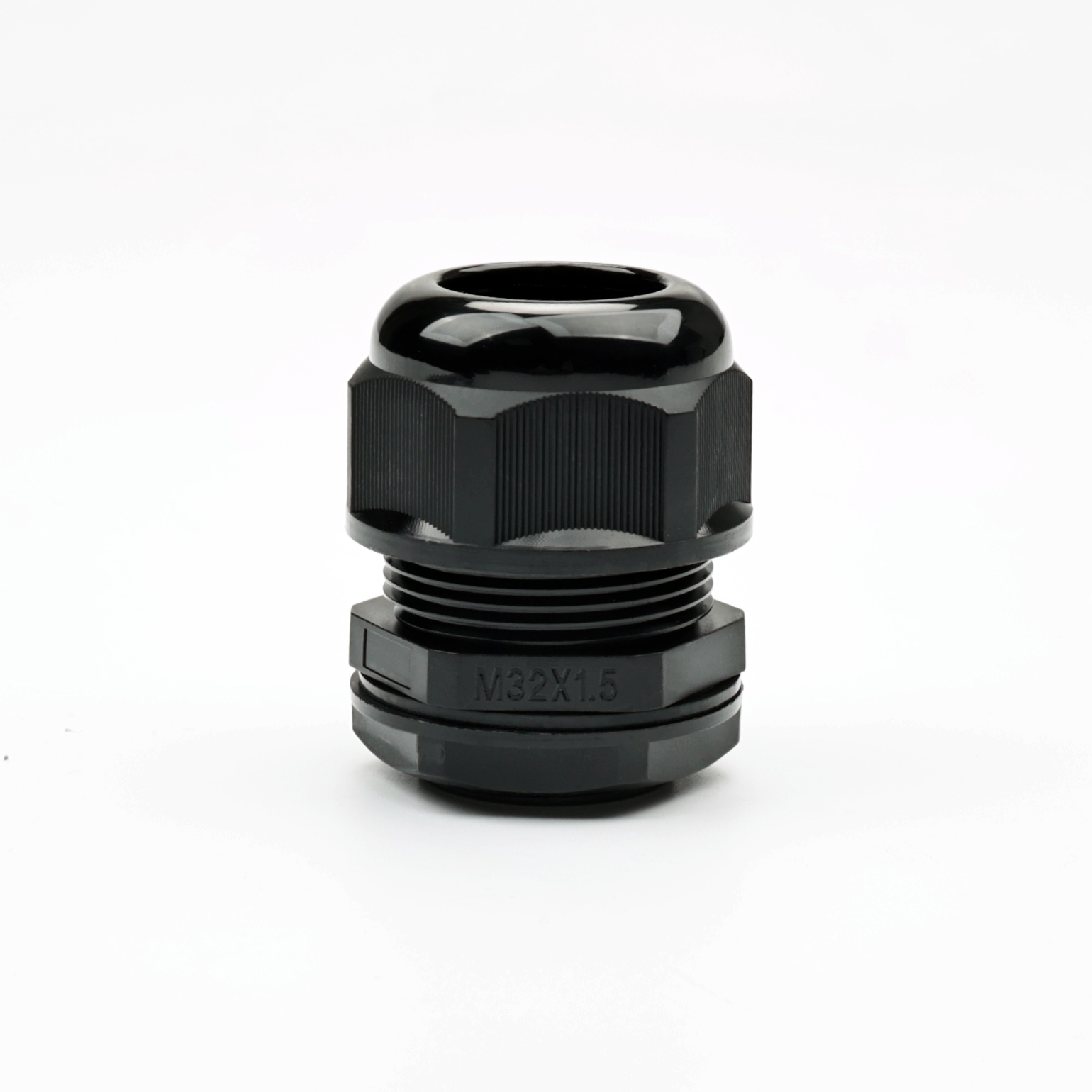
Waterproof electrical connector accessories — including cable glands, solar MC4 connectors, screw plugs, and related fittings — protect cable entry points in electrical enclosures from water, dust, and mechanical stress. The evaluation question for buyers is straightforward: does the product meet the certifications required for the destination market, and do its parameters match the application? The answer should be based on verifiable certificate numbers, declared standards, and measurable specifications. This checklist explains which certifications matter, which parameters to compare, and how to verify a supplier's claims, using the product range of Zhejiang Gutai Connector Co., Ltd. (Gutai) as a reference.
Gutai is a professional manufacturer of wire and cable connectors headquartered in Wenzhou, Zhejiang, China. Its main products include waterproof cable glands, solar MC4 connectors, mini waterproof boxes and connectors, brass screw caps, watertight corrugated connectors, and flexible pipe fittings. Export markets include the Middle East, Southeast Asia, India, Pakistan, the European Union, the United Kingdom, and the United States, with approximately 80% of output exported.
Why Certification and Parameter Verification Matters
Buyers evaluating waterproof electrical connector accessories face a market with many suppliers and even more claims. Four verification gaps are common in practice.
1. Certification claims without document numbers. A supplier may state that a product is CE certified or UL listed without providing the certificate number, the issuing body, or the applicable standard. Without these details, the claim cannot be checked.
2. IP ratings that are declared but not traceable. IP68 is the benchmark ingress protection rating for waterproof connectors under IEC 60529, but the rating is only meaningful when the product is tested to the standard. Buyers should request the test report or certificate that states the protection level.
3. Thread standard confusion. Cable glands are available in Metric, PG, NPT, and G thread types. These standards are not interchangeable. Selecting the wrong thread type is a common cause of field failures and rework.
4. Incomplete parameter data. Datasheets sometimes omit temperature limits, cable range, or material composition. These parameters determine whether a product can survive the actual installation environment.
The cost of a wrong selection extends beyond the component price. A cable gland that fails in the field can allow water to reach live terminals, causing equipment damage, downtime, and safety incidents. A PV connector with oxidized terminals can increase contact resistance and reduce power generation efficiency. A structured verification process reduces these risks.
Industry Background: Standards That Shape the Product Category
The market for these components is large and growing, which makes standardized evaluation more important. The global cable glands market was valued at approximately USD 2.16 billion to 2.25 billion in 2024–2025, with growth forecasts ranging from USD 3.07 billion to USD 4.96 billion by 2034 (Straits Research / Spherical Insights). The global waterproof connector market is estimated at USD 13.4 billion in 2024, projected to reach USD 25.48 billion by 2033 at a CAGR of 7.4% (AOHUA / Industry Intelligence). The solar PV connectors market is valued at USD 1.31 billion in 2024, with MC4 connectors holding an estimated 68% market share (Global Market Insights). Asia Pacific accounts for approximately 38% to 42% of global cable gland revenue, driven mainly by industrialization in China and India (Dataintelo / Straits Research). Established global competitors in this sector include ABB Ltd., Eaton Corporation, Amphenol Corporation, LAPP Group, and HUMMEL AG (Mordor Intelligence / Market Growth Reports).
Several international standards define how cable glands and connectors are constructed, tested, and certified.
IEC 62444 / EN 62444 governs the construction and performance requirements for cable glands for electrical installations. A CE certificate issued to EN 62444:2013 confirms that a cable gland has been evaluated for the mechanical and sealing performance required for EU market access.
UL 514B is the applicable North American standard for conduit fittings and cable glands. A UL Notice of Completion (NoC) covering UL 514B indicates that the product has been evaluated by UL Solutions for the US and Canadian markets.
IP68 / IEC 60529 is the benchmark ingress protection rating for waterproof connectors. An IP68-rated product must withstand continuous immersion in water under the conditions specified by the standard.
RoHS (EU 2015/863) restricts hazardous substances in electrical and electronic equipment. A third-party SGS test report to the RoHS directive provides verifiable evidence of material compliance for EU export.
ISO9001:2015 certifies the quality management system under which the product is manufactured. For cable glands, the certification scope should cover the production process.
Detailed Solution: A Certification and Parameter Framework
The framework below is organized in two parts. Part 1 focuses on certification verification. Part 2 focuses on parameter comparison. Together they form the basis of a supplier evaluation checklist.
Part 1 — Verify Certifications Before Comparing Price

Each certification claim should be checked against three pieces of evidence: the certificate number, the issuing body, and the applicable standard. The following examples show how this verification applies to Gutai's product range.
CE certification. Gutai's nylon cable glands, including the Metric and PG series, are covered by CE certificate number TST20241202520-1SC, issued by Dongguan True Safety Testing Co., Ltd. The applicable standard is EN 62444:2013. The certificate covers cable gland models in the G, MG, PG, and NPT series. This certification supports EU market entry.
UL certification. Gutai's Plastic Cable Gland (model PG) and Cable Gland (model Metric Series) are covered by UL Notice of Completion (NoC) certification. The applicable standard is UL 514B. The certification number is File E539858, Volume 1, issued by UL Solutions. The certification applies to the US and Canadian markets. In addition, the Nylon PA66 material used in these cable glands is UL approved.
RoHS compliance. Gutai's nylon cable glands are covered by SGS test report NGBEC26005747401, issued by SGS-CSTC Standards Technical Services (Ningbo) Co., Ltd. The applicable directive is EU RoHS 2015/863 amending Annex II to Directive 2011/65/EU.
ISO9001 quality management. Gutai's cable glands and solar MC4 connectors are manufactured under a quality management system certified to GB/T19001-2016 / ISO9001:2015. The certification number is Registration No. 04324Q31620R0S, issued by Beijing United Intelligence Certification Co., Ltd. The certified scope is the production of cable waterproof joints.
IP68 protection. Gutai cable glands carry a protection level of IP68. This rating means the glands are suitable for continuous immersion applications under the conditions defined by IEC 60529.
Part 2 — Compare Parameters That Affect Field Performance
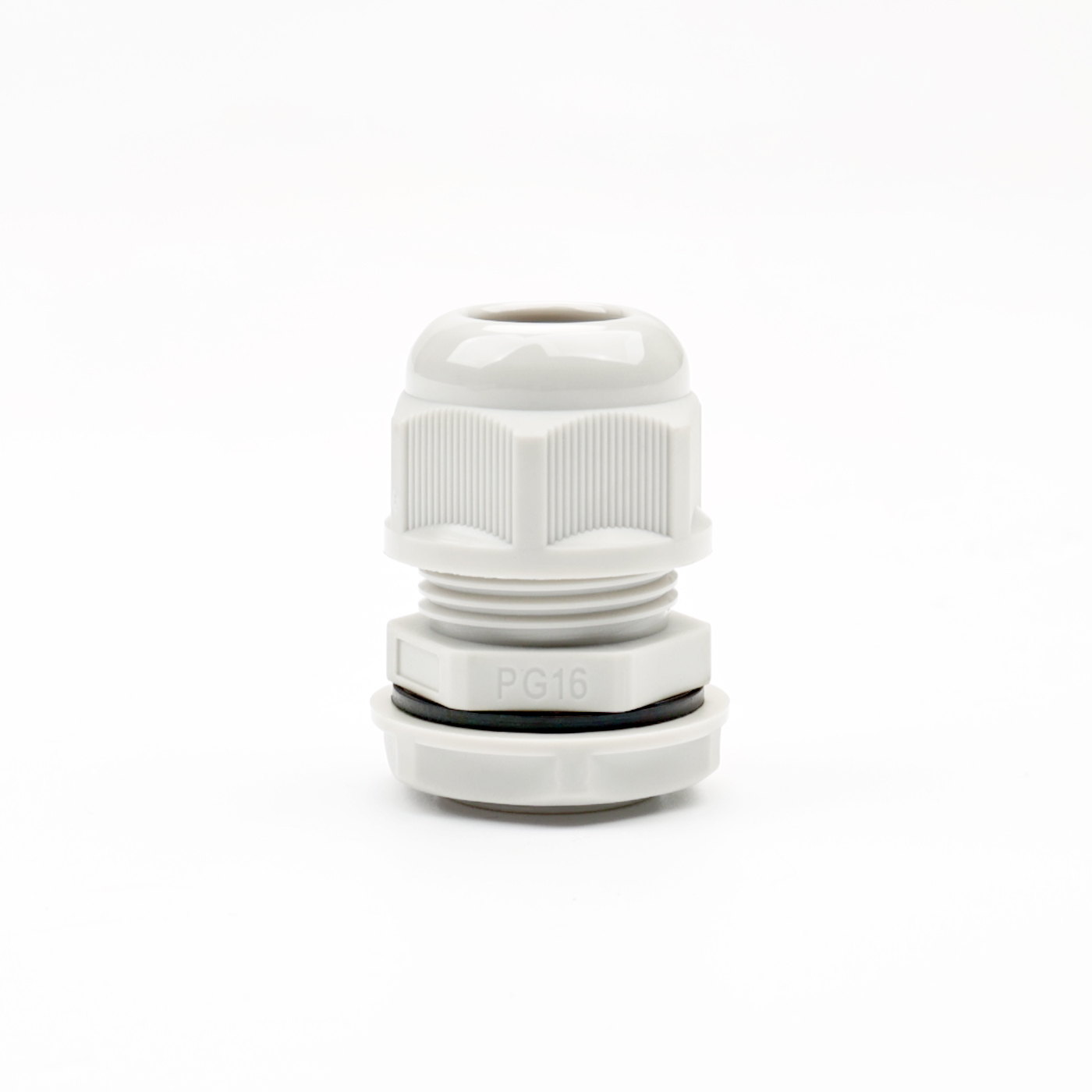
Certifications confirm compliance; parameters confirm fit. Buyers should compare at least five parameter groups across suppliers.
Thread type and size. Gutai's cable glands are available in four mainstream thread types: Metric, PG, G thread, and NPT thread. The Metric series covers thread sizes from M12 to M63, and the PG series covers PG7 to PG48. Matching the thread type to the enclosure or equipment interface is the first step in selection.
Cable range. Both the Metric and PG series accommodate cable diameters from 3 mm to 45 mm, depending on the gland size. The clamping structure uses a special claw and rubber sealing design that provides pull-out resistance across the clamping range.
Material and sealing. Gutai cable glands are made of Nylon PA66 with NBR (Nitrile Butadiene Rubber) sealing parts. The PA66 material is UL certified, and the NBR parts provide sealing and oil resistance. Standard colors are Black (RAL9005), Light Grey (RAL7035), and Silver (RAL7001), with custom colors available on request.
Temperature range. Under static conditions, Gutai cable glands operate from -40°C to 100°C, with a peak instantaneous temperature up to 120°C. Under dynamic conditions, the range is -20°C to 80°C, with a peak instantaneous temperature up to 100°C. The products resist salt spray, acid, alkali, alcohol, grease, and common solvents, making them suitable for harsh working environments.
Electrical ratings for solar MC4 connectors. For PV applications, Gutai offers 1000V and 1500V MC4 connectors, including Y-type and T-type configurations. The 1000V series has a rated voltage of 1000V DC, a rated current of 30A (for 2.5mm², 4mm², and 6mm² conductors) or 45A (for 4mm² and 6mm² conductors), and a test voltage of 6kV (50Hz, 1 minute). Connector contact resistance is 0.5mΩ. The insulation housing is PC/PPO with a UL94-V0 flammability rating. Terminals are available in tin-plated copper or silver-plated copper. The protection class is IP67 when mated, with IP2X touch protection in unmated status. Ambient temperature range is -40°C to +85°C (IEC). These connectors are used in photovoltaic energy storage, lithium energy storage systems, new energy vehicles, AGV and industrial automation equipment, outdoor portable power stations, marine equipment, communication base stations, and engineering machinery.
Step-by-Step Checklist for Evaluating a Supplier
The following six-step process can be applied to any waterproof electrical connector accessory purchase.
Step 1 — Define the operating environment. Determine whether the installation is indoor or outdoor, whether it is exposed to humidity, dust, salt fog, UV, or vibration, and what temperature range the component must survive. Application scenarios include PV plants, wind turbines, EV charging stations, energy storage systems, rail transit, telecom stations, and industrial automation equipment.
Step 2 — Map certifications to the target market. For the EU, request CE certification to EN 62444:2013 and RoHS test reports. For the US and Canada, request UL certification to UL 514B. For global projects, request ISO9001 quality management certification. Record the certificate numbers and issuing bodies for traceability.
Step 3 — Select the thread standard and size. Identify whether the enclosure requires Metric, PG, NPT, or G thread. Then choose the correct size. Gutai's Metric series spans M12 to M63, and the PG series spans PG7 to PG48, covering cable diameters from 3 mm to 45 mm.
Step 4 — Verify cable range and seal fit. Compare the cable outer diameter against the gland's clamping range. Check whether the sealing material is compatible with the application. NBR is the standard sealing material for Gutai cable glands and provides oil resistance.
Step 5 — Check material and temperature limits. Confirm the housing material, the sealing material, and the static and dynamic temperature ratings. Gutai cable glands use UL-approved Nylon PA66 with a static temperature range of -40°C to 100°C and peak tolerance up to 120°C.
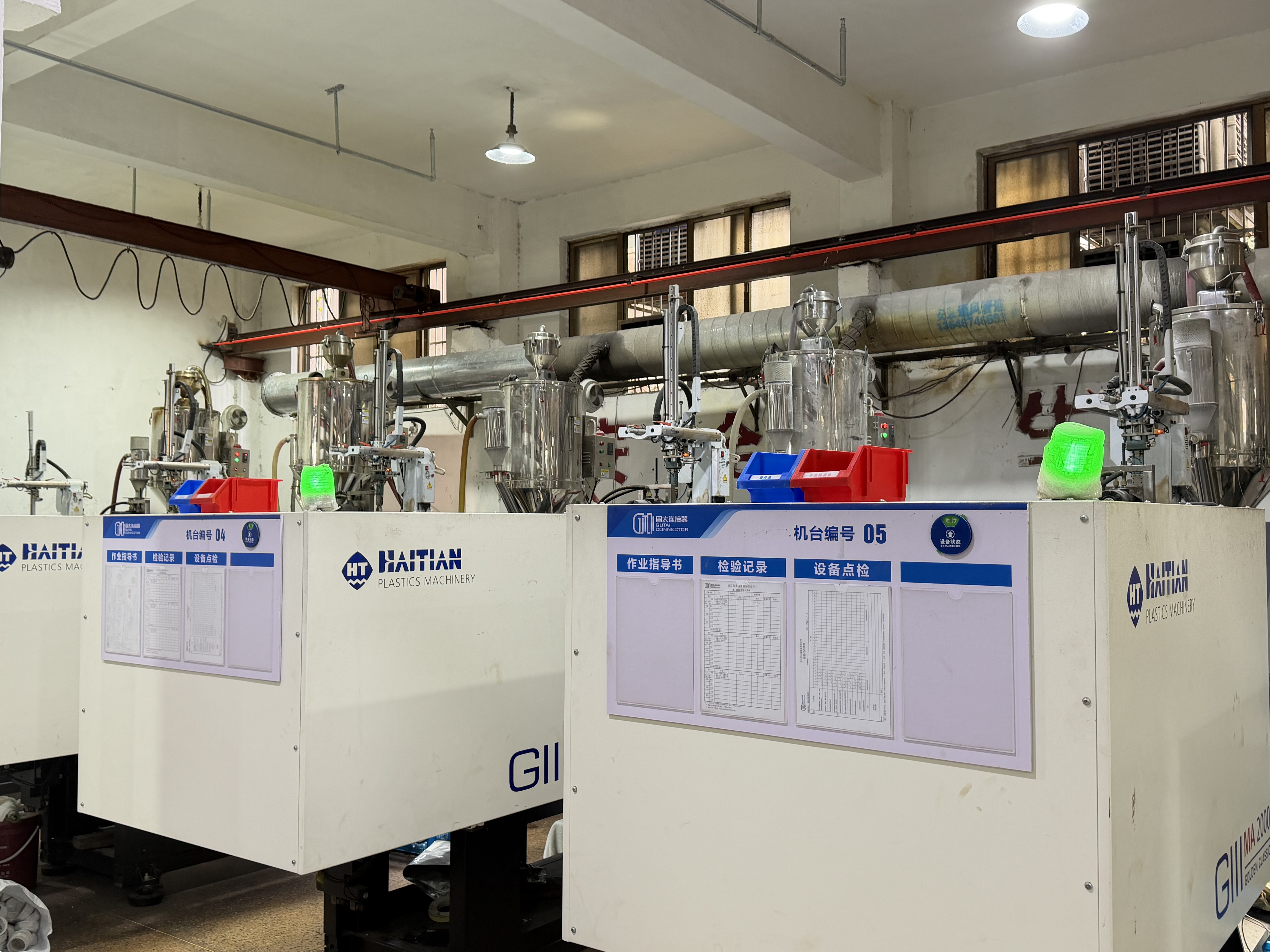
Step 6 — Audit manufacturing quality control. Ask whether the supplier operates under ISO9001, how finished products are inspected, and what the after-sales policy covers. Gutai applies 100% full-dimension inspection, operates a monthly production capacity of 100,000 sets for MC4 connectors and 500,000 pcs for cable glands, and accepts small trial orders.
Use Cases: Verification in Practice
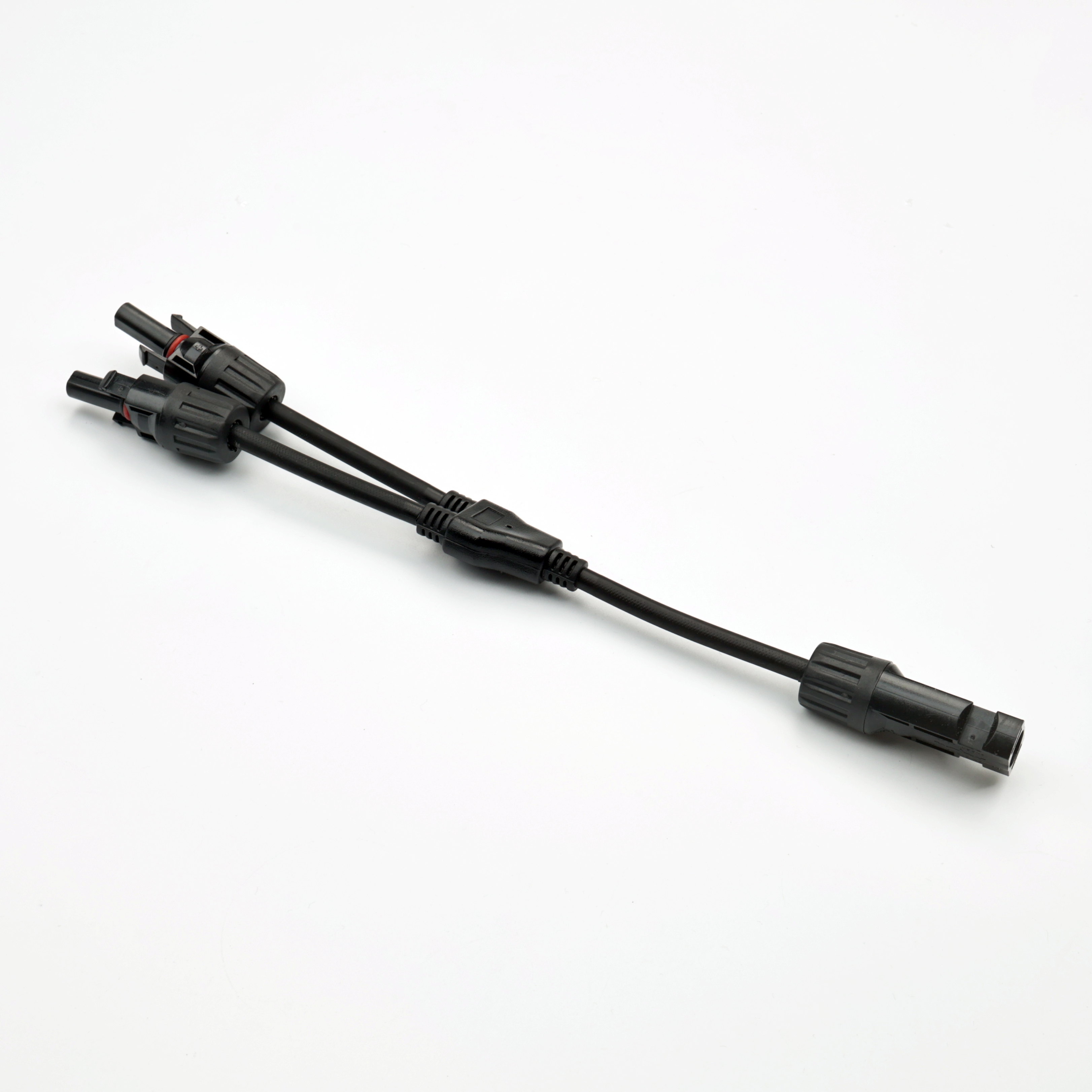
Use case 1 — Desert PV plant in the Middle East. A large Middle Eastern PV energy developer supplied 20,000 sets of anti-UV modified PA66 photovoltaic connectors for use in a 150MW photovoltaic power plant in the desert. Over three years, the connector damage rate dropped from 8% annually for the original imported products to below 1.2%. Downtime caused by connection failures was reduced by 70%, and cumulative savings in maintenance and generation losses exceeded USD 80,000. The housings were customized for extreme desert conditions and passed 1,000-hour UV aging tests. Seals use high-temperature fluororubber, maintaining stable sealing under 70°C surface heat and strong wind-sand erosion. Silver-plated terminals keep contact resistance at low levels for long-term generation efficiency.
Use case 2 — Coastal open-air EV charging stations in Europe. A European coastal project deployed 5,000 sets of IP68-grade metal waterproof connectors for outdoor DC fast charging piles. Over 18 months, the connector-related electrical failure rate fell from 18% annually to 2.6%. Annual maintenance cost per station dropped from over 500 RMB to below 80 RMB, and new station installation efficiency increased by 35%. The connectors use 304 stainless steel and a dual-seal anti-loosening structure, and passed 1,000-hour salt spray tests and IEC 60068-2-6 vibration tests.
Use case 3 — General industrial and automation equipment. Beyond energy applications, cable glands are widely used in electronics, machinery, instrumentation, and electrical cabinets. The same verification process applies: confirm the thread standard, choose the clamping range, verify the protection level, and check the temperature rating against the equipment environment.
Comparison: Metric vs. PG Cable Gland Series
| Parameter | Metric Series | PG Series |
|---|---|---|
| Thread size | M12 – M63 | PG7 – PG48 |
| Cable range | 3 – 45 mm | 3 – 45 mm |
| Thread outer diameter | 12 – 63 mm | 12.5 – 59.3 mm |
| Thread length | 9 – 21 mm | 9 – 21 mm |
| Material | Nylon PA66 & NBR | Nylon PA66 & NBR |
| Ingress protection | IP68 | IP68 |
| Key certifications | CE (EN 62444:2013), UL 514B NoC, RoHS, REACH, CCC | CE (EN 62444:2013), UL 514B NoC, RoHS, REACH, CCC |
Both series share the same material system, protection level, and certification coverage. The difference is the thread standard: Metric is the common international standard, while PG is widely used in European equipment and legacy installations. Selecting the series that matches the enclosure's thread port is the primary decision criterion.
Certification Coverage at a Glance
| Certification | Standard | Certificate / Document Number | Issuing Body | Applicable Market |
|---|---|---|---|---|
| CE | EN 62444:2013 | TST20241202520-1SC | Dongguan True Safety Testing Co., Ltd. | EU |
| UL (NoC) | UL 514B | File E539858, Volume 1 | UL Solutions | US & Canada |
| RoHS | EU 2015/863 | NGBEC26005747401 | SGS-CSTC Standards Technical Services (Ningbo) Co., Ltd. | EU |
| ISO9001 | GB/T19001-2016 / ISO9001:2015 | Registration No. 04324Q31620R0S | Beijing United Intelligence Certification Co., Ltd. | Global |
| IP68 | IEC 60529 | — | — | Global |
Certification coverage is one part of the evaluation; buyers should also confirm that the certificate scope matches the specific product model being purchased.
Frequently Asked Questions
Does Gutai provide CE and RoHS certifications for cable glands exported to the EU?
Yes. Gutai cable glands, including the Metric and PG series, are certified with CE, RoHS, REACH, IP68, and CCC. The CE certificate (number TST20241202520-1SC) is issued to EN 62444:2013 by Dongguan True Safety Testing Co., Ltd. RoHS compliance is verified by SGS test report NGBEC26005747401, issued by SGS-CSTC Standards Technical Services (Ningbo) Co., Ltd., under EU RoHS Directive (EU) 2015/863.
Are Gutai cable glands covered by UL certification for the North American market?
Yes. Gutai's Plastic Cable Gland (model PG) and Cable Gland (model Metric Series) are covered by UL Notice of Completion (NoC) certification. The applicable standard is UL 514B, the certification number is File E539858, Volume 1, and the certification is issued by UL Solutions. It applies to the US and Canadian markets. The Nylon PA66 material used in these cable glands is UL approved.
Can Gutai provide test reports for IEC 62852 or other PV connector standards?
Gutai's core products have passed CE, RoHS, REACH, and IP68 protection level tests, meeting operating conditions from -40°C to 120°C with an average MTBF exceeding 8,000 hours. For specific PV connector requirements, Gutai can provide pre-test data and certification path planning services aligned with IEC 62852, supporting customers to complete full testing through domestic authorized laboratories for entry into European and American markets.
How does Gutai prevent seal aging and terminal oxidation in outdoor PV connectors?
Gutai PV connector housings use UV-resistant modified PA66 material, passing 1,000-hour UV aging tests. Seals are made of silicone or fluororubber; after 500 hours of 100°C high-temperature aging, seal hardness increases only 5 Shore A with no cracks. Terminals use a high-conductivity copper alloy with silver plating, providing low contact resistance and strong oxidation resistance. Dual seal rings and an anti-loosening structure support stable long-term outdoor operation.
Can one brand cover multiple thread standards, and are trial orders available?
Yes. Gutai's thread specifications cover PG, Metric, NPT, and G-type standards. The Metric series ranges from M12 to M63, and the PG series ranges from PG7 to PG48. Small trial orders are acceptable. Monthly production capacity is 100,000 sets for MC4 connectors and 500,000 pcs for cable glands, with 100% full-dimension inspection as part of the quality control process. Quality-related issues are covered by a returns-and-refunds policy. To verify specifications for your application, contact the Gutai team at vincy@gt-connector.com or via WhatsApp at 0086-13676576672, or download the company brochure for the complete product range.
Conclusion: Make Verification Part of Your Procurement Process
Waterproof electrical connector accessories are small components with a critical function. They determine whether an enclosure remains sealed, whether a PV array continues to generate efficiently, and whether an EV charging station operates safely in a coastal environment. The buying decision should follow a verification process: confirm the target market's certification requirements, match the thread standard and cable range, check material and temperature limits, and audit the supplier's manufacturing quality control.
For buyers evaluating Gutai's range, the reference points are documented: CE certificate TST20241202520-1SC for the EU, UL NoC File E539858 Volume 1 for North America, SGS RoHS report NGBEC26005747401, and ISO9001 registration 04324Q31620R0S. These documents, combined with the parameters published for each product series, allow a direct comparison against project requirements.
To review the full product range and specifications, download the Gutai company brochure: Download the Gutai brochure (PDF). For application-specific recommendations or sample requests, contact Zhejiang Gutai Connector Co., Ltd. at Qianzhou Industrial Zone, Liushi Town, Yueqing City, Wenzhou, Zhejiang, China. Email: vincy@gt-connector.com. Tel / WhatsApp: 0086-13676576672.
Have Questions or Need More Details?
Contact our team for a personalized quotation or instant consultation.
Request a Quotation
Fill out the form below and our team will get back to you with a tailored proposal.
WhatsApp Direct Chat
Prefer to chat in real-time? Message us on WhatsApp for instant assistance & quick answers.
- Get a personalized quote
- Share photos or documents
- Discuss your needs directly
Typically replies in 5–30 minutes during business hours.