Brass vs. Nylon Cable Glands: How to Select Waterproof Electrical Connector Accessories
Brass vs. Nylon Cable Glands: How to Select Waterproof Electrical Connector Accessories
Choosing between brass and nylon cable glands is one of the most frequent specification decisions in industrial and outdoor electrical projects. This guide compares both material families across protection, corrosion, temperature, mechanical strength, flame retardance, installation, lifecycle cost and compliance, with a clear selection framework for buyers comparing suppliers of waterproof electrical connector accessories.
Zhejiang Gutai Connector Co., Ltd. (Gutai) is a professional Chinese manufacturer of cable glands and waterproof electrical connector accessories. The company operates from Yueqing, Wenzhou, Zhejiang, with an 80-person team, a 5,000 m² factory, and an annual output of 10 million units. Gutai’s main products include nylon and brass cable glands, Solar MC4 connectors, miniature waterproof boxes, and hose fittings such as AD quick connectors, watertight corrugated connectors, and flexible pipe connectors.
Material Properties: Brass vs. Nylon in Cable Gland Construction
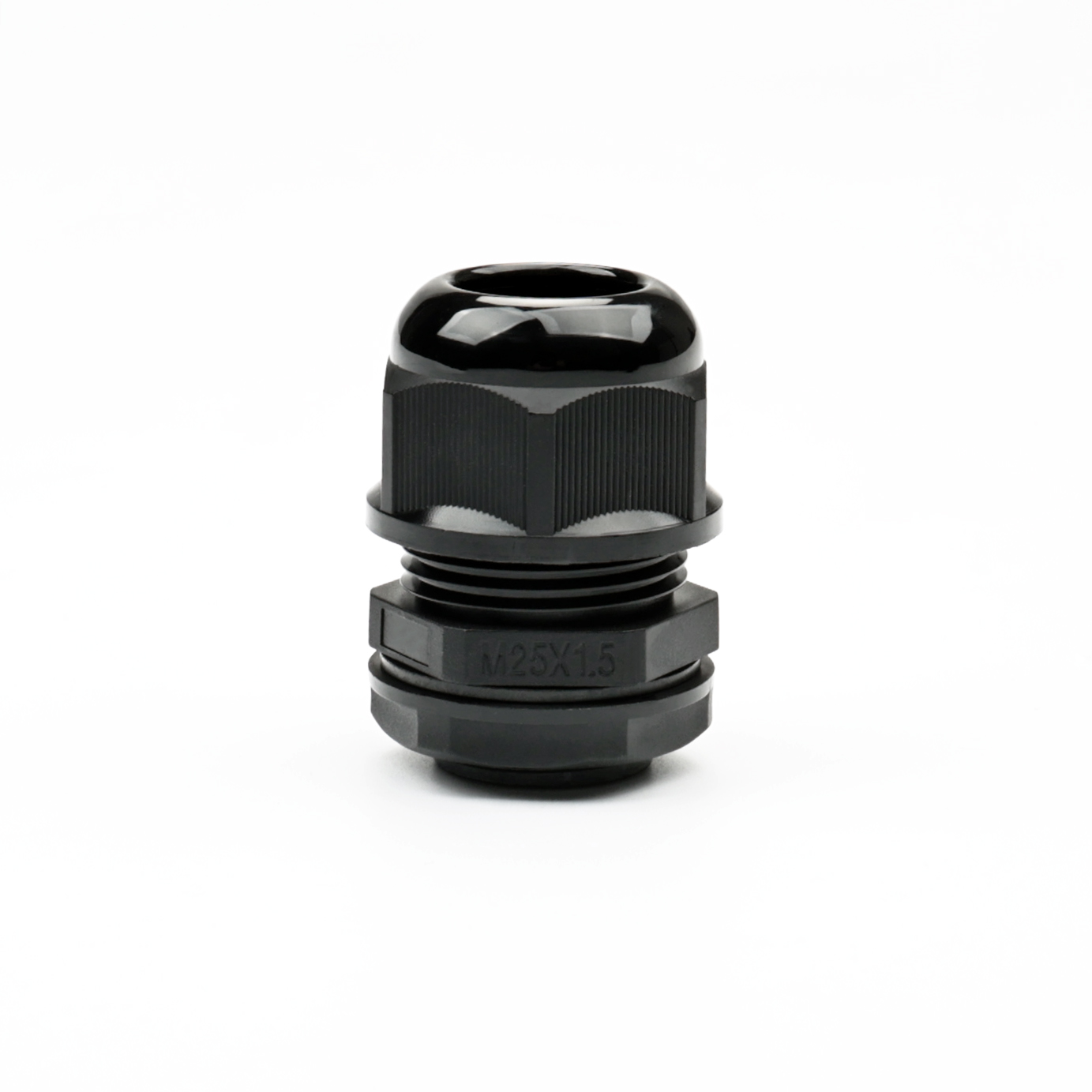
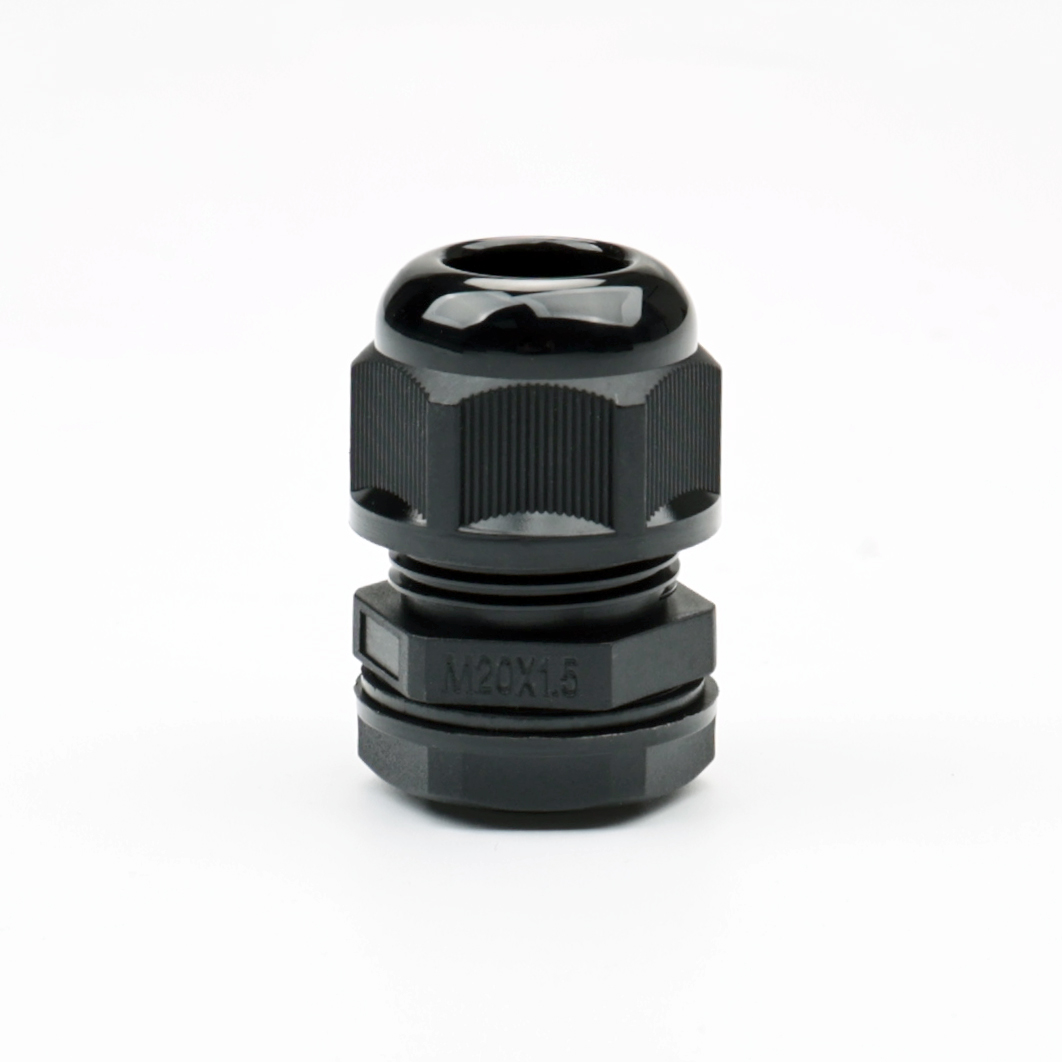
The material determines how a cable gland behaves across its service life. Brass cable glands are machined from brass, available in nickel-plated or standard finishes, and are specified when mechanical strength, corrosion resistance, and metallic shielding are required. Nylon cable glands are molded from PA66, usually with an NBR sealing ring, and are the default choice for cost-sensitive, lightweight, electrically insulating applications.
Gutai’s nylon cable glands, including PG and Metric series, are produced with nylon PA66 and NBR. The PG cable gland series covers thread sizes PG7 to PG48, cable ranges from 3 mm to 45 mm, thread outside diameters from 12.5 mm to 59.3 mm, and thread lengths from 9 mm to 21 mm. The Metric series covers M12 to M63, cable ranges from 3 mm to 45 mm, thread outside diameters from 12 mm to 63 mm, and thread lengths from 9 mm to 21 mm.
For metal requirements, Gutai uses precision CNC machining and offers brass options with 304/316 stainless steel components for corrosive environments. In material selection, the key difference is whether the application demands metal-level mechanical protection, earthing capability, and maximum corrosion resistance, or whether a lightweight, non-conductive, flame-retardant body with lower unit cost is sufficient.
Protection Ratings and Sealing Performance
IP rating remains the standard measure of sealing performance. IP68 is the benchmark ingress protection rating for waterproof connectors, requiring the device to withstand continuous immersion in water under specified conditions. IP67, used on many solar connectors, provides protection against temporary immersion. The protection rating is achieved not by one component alone, but by the body material, thread, seal ring, and gland nut acting together.
Gutai uses a dual-seal ring plus anti-loosening structure on its waterproof connectors. Pre-installed O-rings and anti-slip threads reduce installation errors, a practical advantage because many field failures come from improper torque control rather than material failure. In harsh-condition testing, Gutai reports that its IP68 connectors reduce electrical failures caused by water and dust ingress by over 81% compared with traditional IP67 connectors, which generally have an annual failure rate of around 12% in outdoor humid or dusty environments.
For plastic cable glands, Gutai uses NBR sealing rings, which provide reliable sealing in standard industrial and outdoor installations. For higher chemical resistance or extreme temperatures, silicone or fluororubber seals are used, particularly in solar and outdoor applications where seal ageing must be controlled.
Temperature Range: Which Handles Heat and Cold Better?
Both brass and nylon can operate across a wide temperature band, but their limits are different. Gutai’s products meet operating conditions from -40°C to 120°C, with an average MTBF exceeding 8,000 hours. For solar MC4 connectors, the ambient temperature range is -40°C to +85°C per IEC, with an upper temperature limit of +105°C.
Nylon PA66 is a strong, stable engineering plastic across this range, but repeated extreme temperature cycling can affect seal compression over time. Brass maintains its mechanical properties more predictably under high heat, and metal glands are often preferred for motors, heating equipment, and high-current enclosures. In very cold conditions, brass and nylon both perform acceptably, but the seal material becomes the limiting factor. Gutai’s solar connector seals are designed to age slowly, with hardness increasing only 5 Shore A after 500 hours of 100°C high-temperature ageing and no cracking.
Mechanical Strength, Impact, and Vibration Resistance
Mechanical strength is the main reason engineers switch from nylon to brass. A metal cable gland resists impact, crushing, and pull-out better than a plastic gland of the same wall thickness. In vibrating equipment, a brass gland with a lock nut and anti-loosening design keeps its thread torque more reliably because the metal thread does not creep under compression.
Nylon glands are not low-strength parts by default. PA66 is the same material family used in automotive and industrial structural components. But when an enclosure is inside a machine or outdoors with wind and sand, or where maintenance staff may accidentally step on or strike the cable entry, brass removes the risk of body cracking.
Gutai’s approach is to use a dual-seal ring plus anti-loosening structure on both plastic and metal products. Anti-slip threads reduce the chance of the gland rotating or loosening after installation, and a pre-installed O-ring ensures the seal is not forgotten. For installation efficiency, Gutai reports that one unit can be installed in about 1.5 minutes with rework below 2%, against 3-5 minutes and an 8% rework rate for traditional connectors.
Corrosion and Chemical Resistance
When exposed to salt water, chemical washdown, or coastal atmosphere, corrosion resistance is a defining decision factor. Brass is naturally corrosion-resistant in many environments, and nickel plating further improves its durability in humid and mildly aggressive indoor and outdoor settings. For stronger corrosive environments, Gutai offers brass cable glands combined with 304/316 stainless steel components.
Nylon PA66 is inherently resistant to corrosion and does not rust, which makes it a strong choice for coastal or chemical plants, as long as the seal and thread design prevent water entry and the plastic is properly UV-stabilized. However, not all nylon cable glands on the market are made from virgin UV-stabilized PA66. Recycled or unmodified materials can degrade, discolour, and lose mechanical strength after long outdoor exposure.
Gutai states that it insists on using original factory UL94 V-0 flame-retardant PA66 for its plastic cable gland products. This is an important quality signal when comparing nylon cable gland suppliers, because the grade of PA66 affects the long-term performance and flammability of the gland.
UV Resistance and Outdoor Ageing
Outdoor installations demand UV resistance, especially in solar PV, telecom, and EV charging applications. Nylon is sensitive to UV radiation unless it is formulated with stabilizers. Gutai’s PV connector housings use UV-resistant modified PA66 material that passes 1000-hour UV ageing tests. This matters when specifying plastic cable glands or solar connectors for desert, high-altitude, or coastal solar plants where sunlight intensity is high.
Brass does not degrade under UV, which is a major advantage for long-term outdoor exposure. However, a metal gland with an unsealed or poorly specified seal ring can still leak, and the seal material must be selected carefully. In solar connector applications, Gutai uses silicone or fluororubber seals that withstand high-temperature ageing without cracking.
For buyers deciding between brass and nylon for outdoor projects, the physical question is not whether plastic can survive outdoors, but whether the specific nylon grade is UV-stabilized and whether the supplier can prove it. If the application is fully exposed for 10-20 years and maintenance access is difficult, a brass or stainless steel cable gland is often the safer choice.
Flame Retardance and Electrical Safety
Fire safety is governed by the flammability rating of the material. Gutai’s plastic cable gland materials are UL94 V-0, which means that the material stops burning within a short time after the flame is removed and does not drip flaming particles. This property is critical for electrical cabinets, machinery, and equipment that must meet industrial or project fire codes.
Brass cable glands are inherently non-flammable and provide no fuel in a fire. They are also electrically conductive, which is an advantage when cable screening or earthing is needed. Nylon is non-conductive, which is preferred when the gland must not create an electrical path between the cable and the enclosure.
The right choice depends on the earthing strategy of the installation. In many industrial cabinet applications, nylon glands are used because the cabinet and cable screen are earthed by a separate path. In hazardous or high-current environments, metal glands are used for their strength, non-flammability, and ability to provide a low-resistance path if required.
Thread Compatibility and Standard Sizing
Thread type is a procurement constraint that narrows the choice of supplier. Gutai’s thread specifications cover PG, Metric, NPT, and G-type standards, with dozens of sizes from M8 to M63. This variety allows buyers to source power, signal, and communication interface cable entries from one manufacturer, reducing inventory pressure.
The PG series is common in European-origin equipment, while Metric is the most widely used general-purpose thread in industrial enclosures. NPT threads are found in North American installations, and G-type threads are used in certain conduit systems. When choosing brass or nylon, the thread form is separate from the material decision; a buyer must first match the thread standard and size of the enclosure hole, then choose the body material.
Gutai reports that an automotive electronics customer reduced inventory categories by 65% and emergency procurement costs by 30% after adopting its full series, with free selection guidance and custom sampling services, shortening new product development cycles by 2 weeks.
Weight and Installation Convenience
In high-density enclosures and small devices, the weight and size of the gland can be important. Nylon glands are lighter than brass, which simplifies handling and reduces the load on the cable entry. They are also suitable for miniature waterproof connectors and compact junction boxes where a heavy metal gland would mechanically stress the housing.
Installation convenience is not determined only by the material. Gutai’s design standard of “hand pre-tightening + half a wrench turn” helps installers achieve consistent compression without specialised torque tools. For brass glands, the same pre-installed O-ring and anti-slip thread logic applies, but the installer must be careful not to over-torque the metal thread into a plastic enclosure, otherwise the housing thread may strip.
Nylon glands are more forgiving on plastic threaded holes because the plastic thread is softer. For metal enclosures, brass glands can be tightened firmly without the same risk of thread damage. This interaction between gland material and enclosure material is a practical selection factor that is often overlooked.
Lifecycle Cost: Purchase Price vs. Long-Term Maintenance
The total cost of ownership of a cable gland includes the purchase price, installation time, rework rate, maintenance frequency, downtime, and energy loss when contact resistance rises. In the initial purchase, nylon cable glands are generally lower in unit price than brass glands because the material and machining process are less expensive. Brass requires precision CNC machining; Gutai operates machining workshops that produce metal parts for its cable glands and connectors.
At the system level, the lower-cost plastic component may become the most expensive failure point if it leaks, cracks, or corrodes under UV. Gutai’s data from an EV charging station client shows that adopting IP68 connectors saved 32,000 RMB in annual maintenance costs per station. A PV power plant project saved over 600,000 RMB in cumulative maintenance and generation losses over 5 years after switching to Gutai metal connectors.
In parallel, Gutai reports that lower failure rates reduced emergency procurement costs by 30% and shortened new product development cycles by 2 weeks. For buyers under maintenance pressure, the question is not what the gland costs, but what the connected system costs when the gland fails.
The material choice should be aligned with the failure consequence. In a light-duty indoor sensor, a nylon gland is the rational economic choice. In junction boxes supporting a production line or solar generation revenue, a brass or stainless steel gland is often the lowest TCO option.
Accessories and System Integration
Waterproof electrical connector accessories include not only cable glands, but also sealing plugs, screw plugs, adapter fittings, locknuts, waterproof junction boxes, and universal fittings that allow one product family to cover multiple connection jobs. This matters when the specification decision is made at the project level, not at the single-part level.
Gutai’s product lineup includes cable gland screw plugs, waterproof junction boxes such as the M16, M20, and M25 boxes, solar MC4 connectors with Y and T branch options, watertight corrugated connectors, waterproof flexible pipe connectors, and waterproof vent plugs. For a solar plant or distribution cabinet, using the same manufacturer for the gland, the box, and the branch connector reduces compatibility risk.
Metal and plastic components do not have to be chosen in isolation. A typical installation may use brass glands at the main power entry, nylon glands for signal cables, a plastic junction box for low-voltage control, and a metal junction box for high-power distribution. The supplier’s ability to provide the full portfolio is therefore a procurement advantage.
Compliance and Certification Considerations
Projects in Europe and North America increasingly require traceable certification and material documentation. Gutai’s core products have passed CE, RoHS, REACH, and IP68 protection level tests. For solar PV connectors, Gutai can provide pre-test data and certification path planning services compliant with IEC 62852, supporting customers to complete full testing through domestic authorized laboratories for entry into European and American markets.
For cable glands, IEC 62444 governs the construction and performance requirements for cable glands for electrical installations. Buyers should request material certificates, flame class proof, and IP rating test reports when comparing suppliers. The certification document set is especially important when the buyer is an OEM or a project integrator that must pass the documentation to an end customer.
Gutai’s nylon and brass cable glands are produced under the ISO9001 quality management system, with CE, RoHS, REACH, and IP68 verification on the core lines. The company also accepts OEM specifications, which means the exact standard, material, and marking can be tailored to the buyer’s product manual and panel design.
Brass vs. Nylon: Comparison Table
| Evaluation Criterion | Brass Cable Gland | Nylon PA66 Cable Gland |
|---|---|---|
| Typical body material | Brass, nickel-plated or standard | Nylon PA66 with NBR seal |
| Standard thread options (Gutai) | PG, Metric, NPT, G-type, M8-M63 | PG7-48, Metric M12-M63 |
| IP rating (Gutai core products) | IP68 certified | IP68 certified |
| DC solar rating (MC4 line) | Silver-plated copper terminals, 0.5 mΩ contact resistance | Tin-plated copper terminals, 0.5 mΩ contact resistance |
| Flammability | Non-combustible metal | UL94 V-0 |
| UV resistance in outdoor exposure | No UV degradation | UV-stabilized modified PA66, 1000-hour UV ageing test |
| Mechanical strength and impact resistance | Higher | Good, lower than metal |
| Corrosion resistance | Good; 304/316 stainless steel upgrades available | Inherently corrosion-proof, no rust |
| Electrical conductivity | Conductive; can support earthing/shield continuity | Insulating body |
| Weight | Heavier | Lighter |
| Relative initial price | Higher | Lower |
| Maintenance model | Long-term fixed installation; less frequent inspection | Standard maintenance; stable when correctly specified |
| Best-fit application | High-vibration, coastal, high-temperature, high-power, critical infrastructure | Indoor cabinets, sensors, PV combiner boxes, cost-efficient general industrial wiring |
The selection logic in this table reflects material-level differences and Gutai’s verified product specifications. In a purchase decision, the table should be applied with the actual operating conditions, cable diameter, thread type, and certification requirements of the project.
Decision Framework for Choosing Between Brass and Nylon
The decision is easier when it is reduced to eight questions:
1. What is the required ingress protection rating? If IP68 continuous immersion is required, use a gland with verified IP68 test evidence and a low-maintenance sealing design.
2. What thread standard does the enclosure use? Match PG, Metric, NPT, or G-type and confirm the exact thread size. A brass or nylon gland must fit the existing hole without adaptors wherever possible.
3. Is the environment outdoors, coastal, or chemical? Coastal and chemical environments favour either nickel-plated brass with stainless steel hardware or UV-stabilized nylon with a high-grade seal.
4. Is the equipment subject to vibration, impact, or pulling? Use brass or stainless steel for heavy vibration and impact risk, and ensure a lock nut and anti-loosening design.
5. Is UV exposure high for many years? Solar and telecom projects should require UV-stabilized nylon or metal to avoid surface degradation.
6. Is electrical insulation or conductivity required? Choose nylon for insulative bodies and brass when a conductive path supports earthing or screen termination.
7. What is the maintenance policy of the end user? If maintenance access is difficult, or failure causes high downtime cost, the higher initial metal price is normally justified.
8. Is the supplier capable of supplying the whole waterproof connection system? A single source for glands, junction boxes, MC4 connectors, and accessories reduces procurement risk and inventory costs.
Use Cases
Solar PV Combiner Boxes and Inverters
In solar PV plants, cable glands are used at combiner boxes, inverters, and junction boxes. Gutai’s solar MC4 connectors are available in 1000V and 1500V systems, with Y-type and T-type branch connectors. For the DC cable entries, nylon cable glands with UV-stabilized PA66 and IP68 protection are used; for high-current and high-temperature sections, brass or metal glands provide lower thermal stress and stronger termination. The terminal material for the MC4 line is tin-plated copper or silver-plated copper, with contact resistance of 0.5 mΩ.
EV Charging Stations
EV charging stations combine outdoor humidity, frequent operation, vibration from vehicles, and corrosive air in coastal areas. A metal cable gland with stainless steel hardware is suitable for the main power entry, while the control and communication cables can be terminated with nylon glands in an IP68-rated enclosure. Gutai reports that one EV charging station client saved 32,000 RMB in annual maintenance costs per station after adopting its IP68 connectors.
Industrial Automation Control Cabinets
Factory automation cabinets are predominantly indoor, with clean but variable temperature. Nylon cable glands are usually the best economic choice for these conditions, provided the PA66 grade is flame-retardant and the gland supports a wide cable range. For robotic arms and moving machinery where vibration is constant, brass glands with anti-loosening threads are safer.
Rail Transit and Communication Base Stations
Railway signalling and telecom base stations require long service life and minimal maintenance. The environment may include vibration, temperature swings, and occasional water washdown. Brass cable glands with seals rated for wide-temperature operation are commonly used for main feeders; UV-stabilized nylon can be used for signal connections inside the cabinet. Gutai’s products meet operating conditions from -40°C to 120°C.
Food Machinery and High-Pressure Washdown Zones
Food processing equipment is cleaned with high-temperature, high-pressure water and chemicals. The cable gland must resist the washdown chemicals and withstand thermal cycling. Brass with stainless steel hardware is the established choice for this environment; the seal should be specified for chemical resistance and the gland should be able to be installed without traps where water can pool.
Supplier Evaluation for Waterproof Electrical Connector Accessories
Evaluation of a supplier is as important as the material choice. The following checklist helps buyers verify whether a manufacturer can supply reliable brass or nylon cable glands at project scale:
1. Factory capability: does the manufacturer control machining, molding, assembly, and quality inspection in-house? Gutai’s 5,000 m² factory includes machining workshops and assembly operations.
2. Product range: can the supplier provide both plastic and metal cable glands, screw plugs, junction boxes, and solar connectors from one catalog?
3. Certification evidence: request a copy of CE, RoHS, REACH, and IP68 test reports. For solar connectors, check whether IEC 62852 testing support can be offered.
4. Material integrity: confirm that nylon products are made from original factory PA66 with UL94 V-0 rating, not recycled or unverified material. Confirm metal grades, such as brass with optional 304/316 stainless steel.
5. Installation support: ask about torque guidance, pre-installed O-rings, training, and technical response time. Gutai’s pre-installed O-ring and anti-slip thread design simplifies installation and reduces rework.
6. OEM capability: for branded products, verify the supplier’s customized marking, packaging, and product engineering support. Gutai accepts OEM specifications.
7. Long-term reliability data: request MTBF, UV ageing, temperature range, and failure-mode data. Gutai reports an MTBF exceeding 8,000 hours and operating conditions of -40°C to 120°C.
For an in-depth look at supplier vetting, see our related guide on how to vet waterproof electrical connector accessories suppliers.
Frequently Asked Questions
Are Gutai cable glands compliant with CE, RoHS and IP68?
Gutai’s core products have passed CE, RoHS, REACH, and IP68 protection level tests, meeting operating conditions from -40°C to 120°C with an average MTBF exceeding 8,000 hours. For PV connectors requiring IEC 62852 or EN 50521, Gutai can provide pre-test data and certification path planning services, supporting customers in completing full testing through domestic authorized laboratories for entry into European and American markets.
Can Gutai provide both brass and nylon cable glands in PG and Metric threads?
Yes. Gutai covers PG, Metric, NPT, and G-type thread standards, with sizes from M8 to M63. The PG nylon cable gland series covers PG7-48 with cable ranges from 3 mm to 45 mm; the Metric series covers M12-M63 with the same cable range. Brass versions with the same thread family are available for higher mechanical and corrosive requirements, with 304/316 stainless steel components as an option.
How does a nylon cable gland from Gutai handle long-term outdoor UV exposure?
Gutai’s PV connector housings use UV-resistant modified PA66 material that passes 1000-hour UV ageing tests. Seals are made of silicone or fluororubber, with hardness increasing only 5 Shore A and no cracks after 500 hours of 100°C high-temperature ageing. The dual seal ring and anti-loosening structure maintain sealing while the UV-stabilized body resists surface degradation.
Can a single brand supply all the waterproof connector accessories needed for one project?
Gutai is designed for one-stop supply: cable glands, MC4 solar connectors, Y and T branch connectors, waterproof junction boxes in M16, M20, and M25 sizes, watertight corrugated connectors, flexible pipe connectors, screw plugs, and vent plugs. An automotive electronics customer reduced inventory categories by 65% and emergency procurement costs by 30% after adopting the full series, with free selection guidance and custom sampling services that shortened development cycles by 2 weeks.
How long does it take to get samples or a quotation for a cable gland project?
Sample and quotation timing depends on the thread type, material, and customization. Gutai provides custom sampling services and free selection guidance as part of the OEM process. For a specific cable gland or waterproof connector requirement, contact Gutai’s specialist team with the cable diameter, thread size, enclosure type, and target certification, and request a sample or quotation directly.
Conclusion
Brass and nylon cable glands are not competing products in a simple sense. They are two material systems that address different failure modes, environments, and cost structures. Nylon PA66 glands are lightweight, electrically insulating, and cost-effective for general industrial, cabinet, sensor, and PV applications, especially when the nylon is original-grade UL94 V-0 material with UV stabilization. Brass glands offer higher mechanical strength, predictable temperature behaviour, non-flammability, and superior performance in coastal, high-vibration, and high-maintenance-cost environments.
The correct decision flow begins with enclosure and thread compatibility, then moves to IP rating, environmental exposure, mechanical load, and fire safety. Once the material class is identified, the supplier’s certification evidence, material traceability, installation design, and one-stop range determine whether the specification becomes a reliable project outcome. Gutai’s combination of nylon and brass manufacturing, MC4 solar connectors, junction boxes, and accessories allows buyers to standardize the waterproof connection system with one manufacturer while keeping the option to select the right material for each cable entry.
For engineering and procurement teams evaluating brass or nylon cable glands for a new product line or project, the practical next step is to request a sample of the exact thread size, verify the IP68 test report, and validate the material specification against the operating environment.
Download the Gutai product catalog (PDF) for the full family of cable glands, solar connectors, and waterproof accessories.
Need help selecting the right brass or nylon cable gland?
Contact Vincy Wang at vincy@gt-connector.com or WhatsApp +86-13676576672. Gutai provides free selection guidance, custom sampling, and OEM support.
Have Questions or Need More Details?
Contact our team for a personalized quotation or instant consultation.
Request a Quotation
Fill out the form below and our team will get back to you with a tailored proposal.
WhatsApp Direct Chat
Prefer to chat in real-time? Message us on WhatsApp for instant assistance & quick answers.
- Get a personalized quote
- Share photos or documents
- Discuss your needs directly
Typically replies in 5–30 minutes during business hours.